
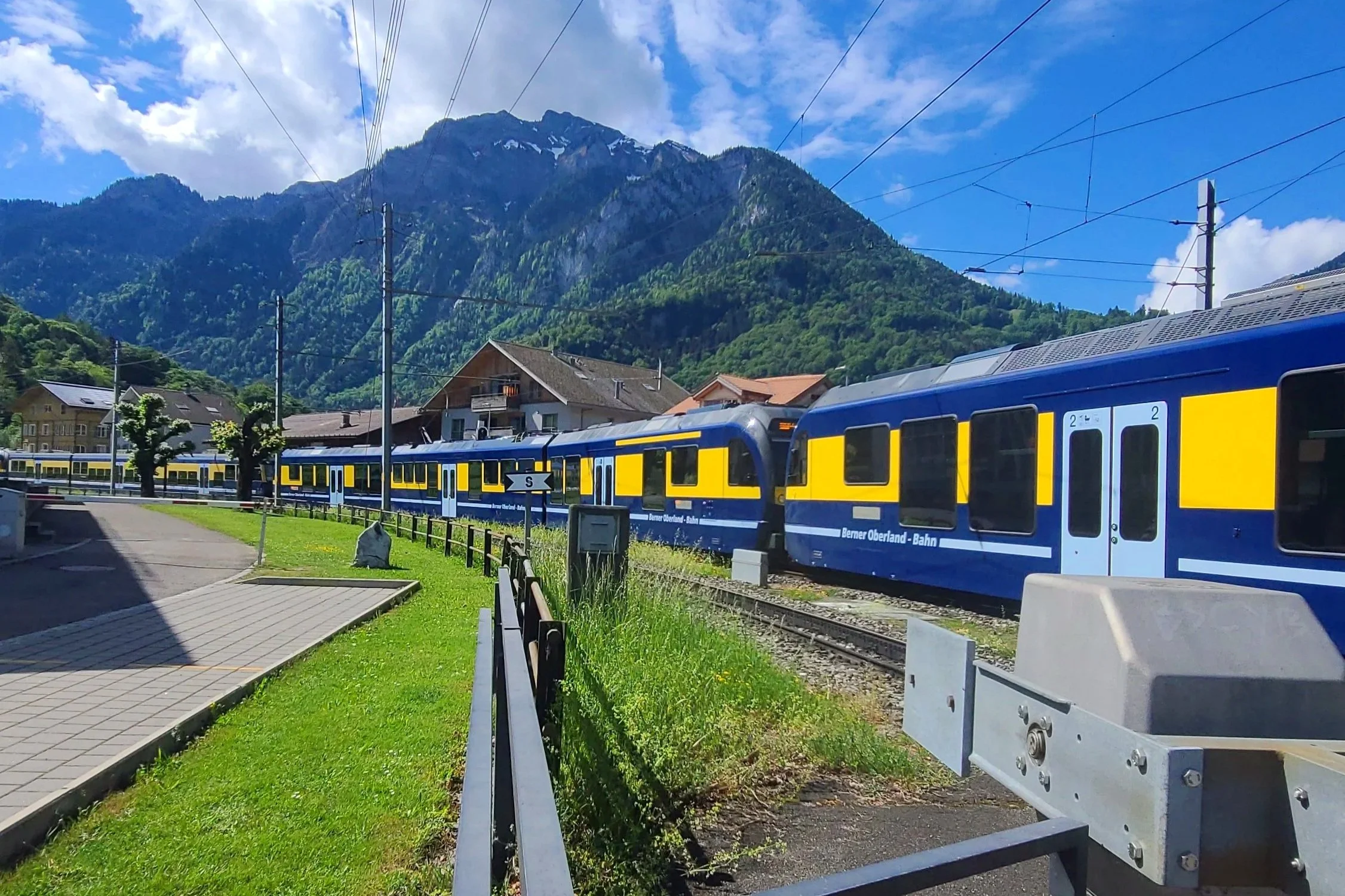
I’m baaack! Well, for now. I’m here to brag a little about how well I planned my most recent trip to Europe. Specifically, I went to Germany, Switzerland, and France. I planned my ground travel so well that I wanted to make a standalone post about it.
In this post, you will learn when and how I went about scheduling all of the train and bus travel that took me across three European countries. I went from Munich, Germany to Interlaken, Switzerland and then from Swizterland to 3 different locations in France.
The key was scheduling ahead and downloading all the relevant train apps. This saved me money and plenty of hassle. There were only a few hiccups along the way, but I’ll also share how those were smoothed over with help from technology, friendly locals, and some luck!
European Train Travel
What an incredible luxury it is to travel from country to country by train with such ease. Europe is unique for this. You certainly can’t get this in the USA—it’s barely even possible state-to-state!
While I could have made the choice to take quick flights between major cities in Europe, train travel was an easy, fun, low cost, and scenic alternative. I also saved on costs this way in the long run. I’m usually not one to plan so much in advance. But for Europe, booking ground transportation ahead of time saves serious dollars.
There are passes you can get to simplify the booking process, like the Eurail Pass. I looked into this initially. But for the flexibility I needed, the “Eurail Global Mobile Pass Flex” would have cost $682. This would have only covered trains, and some of the places I wanted to go required bus travel.
Instead, I paid less than half ($329 total) the Eurail price to book the individual trains and the buses for where and when I needed them.
It took a bit of research for each country as well as a bit of time and finesse. But this was well worth the savings in the end. Not to mention, the process was seamless.
A major advantage of doing this in advance (about 3.5 months before my trip) was the lower costs. I checked out tickets for my same journeys a few days before and they were all at least twice the cost. Also, booking ahead allowed me to book a guaranteed seat, which is required on some trains like in Germany.
Tip: Book in advance for European ground transportation to cut the costs in half.
The following was my itinerary.
Germany to Switzerland
For this leg of my trip, I was able to book my tickets via the Deutschebahn (DB). I went from Munich on the German DB, the ECE line, and then transferred to the Swiss rail system (IC line) in Zurich. Booking the ticket included both for $65.
Before departing Munich, my relatives laughed and said “good luck” with the DB, suggesting it’s always late. Indeed, there were signal issues and the DB navigator app with my QR ticket alerted me to this.
I would miss my transfer so it suggested other times to me, automatically, and then auto-rebooked me for the time that I could make. The ticket agent on board the Swiss train scanned my QR code, paused briefly, and then said, “It’s ok.” So the rebooking went perfectly. I went on my way to Interlaken from there.
Tip: Some countries have less reliable trains than others. Familiarize yourself with what to expect by listening to locals and recent travelers.
Travel Around Interlaken
The bus line in and around Interlaken was free via a pass I received from my lodge at check-in. This was so helpful for getting to most places I needed to go within Interlaken itself as well as to the train stations to locations farther out.
I had to purchase tickets mainly at the stations in-person to get to some of the smaller towns embedded in between the Swiss Alps. I waited to do this until I was already in Interlaken so I had flexibility to travel around the Swiss Alps freely and in accordance with the weather, which is iffy in May.
The kiosks were the easiest way for me to get my tickets, as the app was not working well for me to purchase these. This was the only time I had to purchase train tickets in person at a kiosk during my whole trip! The max I paid for a train to Grindelwald was $13.15 each way.
Tip: Never get on a train in Switzerland without a ticket. There’s an over $100 fine if you do so!
Switzerland to France
After experiencing the Swiss Alps for 4 nights, I knew I’d want to see more of it—in France! I wanted to go to Chamonix and the only way that made sense (without extra cost and transfers) was to go through Geneva for $54. In Geneva, I boarded a 1-hour bus the rest of the way to Chamonix for $24.
This time, I found that the easiest way to book Switzerland’s timely SBB trains was via Trainline. I booked the bus, just a few blocks from the Geneve train station, via Swiss Tours.
A note about Swiss trains: When I say “timely,” I really mean it. Switzerland is known for its punctual train system that runs 24/7 on an insanely accurate schedule that is all set into motion essentially as one giant flowing clock. Watch the following video on YouTube to learn all about Switerland’s incredible train system.
Essentially, you can always guarantee that the train time will be the train time in Switzerland. When your ticket says you have to transfer and the next train is in 3 minutes—it will be in 3 minutes. No time to waste!
As a traveler, having Switzerland’s SBB app downloaded was so helpful. The app includes a map of the platforms at the next station with the route you need to take through the station to transfer. This way, I could calculate whether or not I would have time to grab a quick brezn from Brezelkönig.
Tip: Download the country’s train app in advance, sign in, and get your tickets loaded up there for the clearest instructions and updates.
Bus Travel in Chamonix
Before arriving in Chamonix, I learned that my accommodation was about a 25 minute walk out of town. That wasn’t too bad, but I knew I’d want to take the bus with my suitcase. There’s a local bus system that I was able to get a discount on via my lodging.
On my first ride out to my lodging, I paid in coins (euros) and the driver gave me a card I could load. With the discount code, I got a pass for 3 days that only cost me $7 for unlimited rides. The pass was oddly not working when I’d scan it on the bus but the drivers were forgiving. The bus station in Chamonix made me a new one and then it worked perfectly thereafter.
The major hiccup that occurred was the morning I left Chamonix. I had a Swiss Tours bus (booked in advance for $19) to catch and I was outside ready at the bus stop well before the scheduled local bus arrival time. But it never came. Come to find out, I was leaving on a French holiday (Ascension Day). This meant there were no local buses running that morning.
I panicked because my scheduled Swiss Tours bus was leaving in 30 minutes, it was raining, and I was loaded down with my suitcase. No good. So I stuck my trusty thumb out and the first car that went by stopped immediately.
The kind fellows that picked me up were listening to Spanish music and speaking Spanish. They had a baby seat in the backseat, and helped me put my suitcase into their trunk. All of this felt completely safe and right to me—kind people helping out a woman stuck in the rain on Ascension Day!
I tried to give the driver 10 Euros as he helped me get my suitcase out at the Chamonix bus station. He refused and we wished each other a nice day, never to meet again. So kind! And what a good save. I made it to my scheduled bus with 15 minutes to spare.
Tip: Check the country’s holiday schedule when you travel because it may interrupt your ground transportation plans!
Travel Within France (via Switzerland)
France is a weird shape. I was traveling along the western border which is shared with both Switzerland and Germany. Because France’s border is a meandering line, traveling within this part of France can oddly still involve traveling between countries.
The easiest and least expensive path to get from the French Alps to the Alsace wine region was to go back through Geneve to Basel (for $65), and then up to Colmar (for $22).
Figuring this out took several failed attempts on France’s SNCF Connect website and Switzerland’s SBB website. Trainline was the only site that allowed me to book these two different European lines seamlessly .
Upon arriving to Basel, the train I booked on SNCF to Colmar was cancelled (Ausfall). This time the SNCF app didn’t auto-rebook me like the DB app did for my missed transfer. I didn’t want to rebook myself or I’d be charged another ticket. Instead, I had to pay attention to the digital signs in the station. These directed folks to board the next available train which was just a few minutes later, and it included the new platform number. Easy!
Tip: Pay attention to cancellations by checking out the digital boards in the train stations. They will direct you if the train app doesn’t.
Travel Around Alsace Wine Region
There are a couple of different options for travel around Alsace. For farther travel between larger villages or hubs, the SNCF train line can be helpful. I booked an $11 one-way ticket to Sélestat one day so I could hop a round-trip bus for $7 to visit a castle.
To visit the smaller villages around the Alsace region, there are two options: (1) An all-day, hop-on-hop-off tour bus (the “Kutzig”); or (2) The local bus system. In my opinion, and because I knew I only wanted to visit only a couple of the towns, I opted to navigate the local system over the Kutzig.
The Kutzig was 32 Euros for the day and it only ran between 8:30am and 4:30pm. That didn’t feel like enough time to see multiple villages, even if I wanted to. Also, if it had allowed me to past dinner time in the villages, then I would have done it. But it was equivalent to the local bus schedule in this way.
Instead, I road a local bus from Sélestat for 4 euros to get to the first village I wanted to explore (Ribeauvillé). I walked a famous wine trail for 20 minutes to the next village Riquewihr. Then, I paid another 4 euros to get the local bus back to my lodging in Colmar.
So for less than $35 (less than the Kutzig tour bus ticket) I took a train, toured a castle (for $7), walked a wine trail, and rode the bus 4 times.
Tip: Don’t jump at the first tour option you see. The local way is often the better and less costly way!
French Wine Country To Paris
Aside from one transfer in Mulhouse, the simplest stretch of travel was the SNCF train to Paris. This was a 3 hour train ride for $80. I saw a lot of France along the way and rode in a comfortable seat.
I arrived to Lyon Station which is located in Paris’s 12th right next to the Seine River. I was able to walk from there to my accommodation in 20 minutes.
Getting around Paris was just like New York. For $25, I bought a RAPT Metro card with unlimited rides for a day which was perfect for free movement all over the city. I saw everything I wanted to, and still walked quite a bit!
In Conclusion
All in all, I am so happy I booked the majority of my ground transportation in advance of my travels. I saved money and the trains and apps really worked quite seamlessly.
Even with a late train transfer, a broken bus pass, a cancelled train, and a local bus that never arrived, I still made my way around and between 3 countries with few interruptions.
Thanks to helpful technology and friendly local people, I had a smooth ride through Europe in May! Not to mention, the beautiful views kept me feeling connected to the countries I was visiting.
I can’t wait to share more from this trip! I’ll be highlighting the best of the best in more posts coming this summer. Stay tuned.
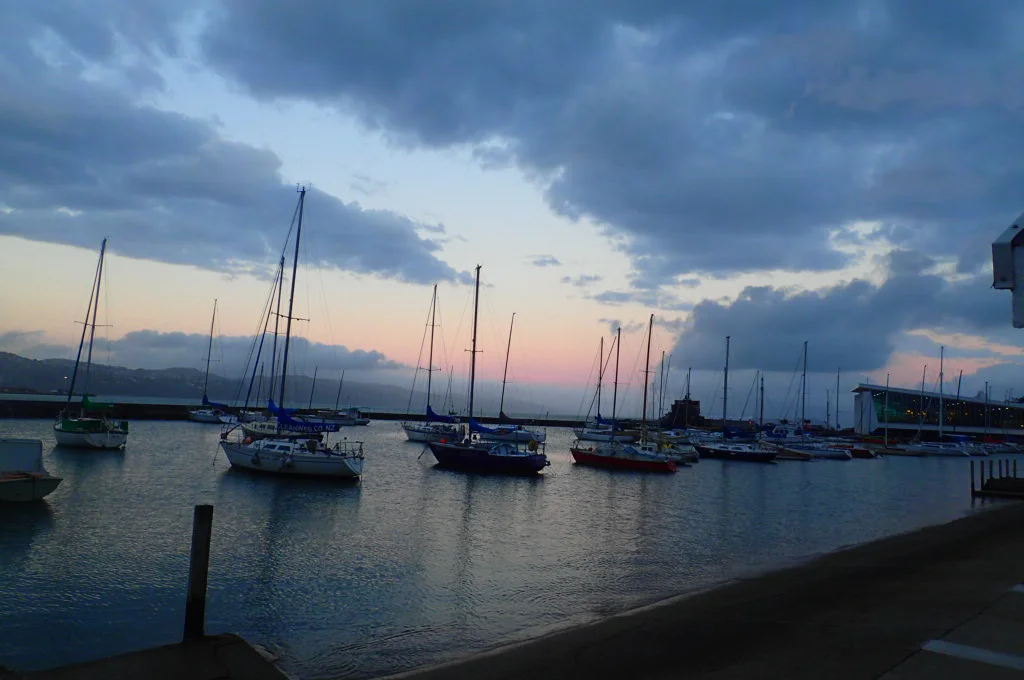
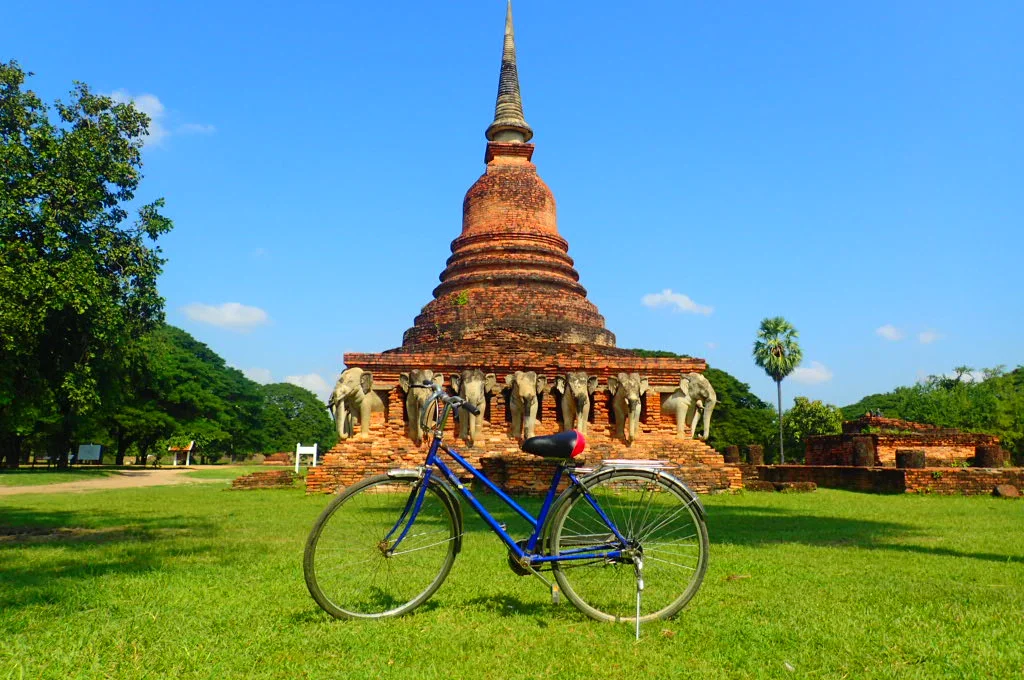
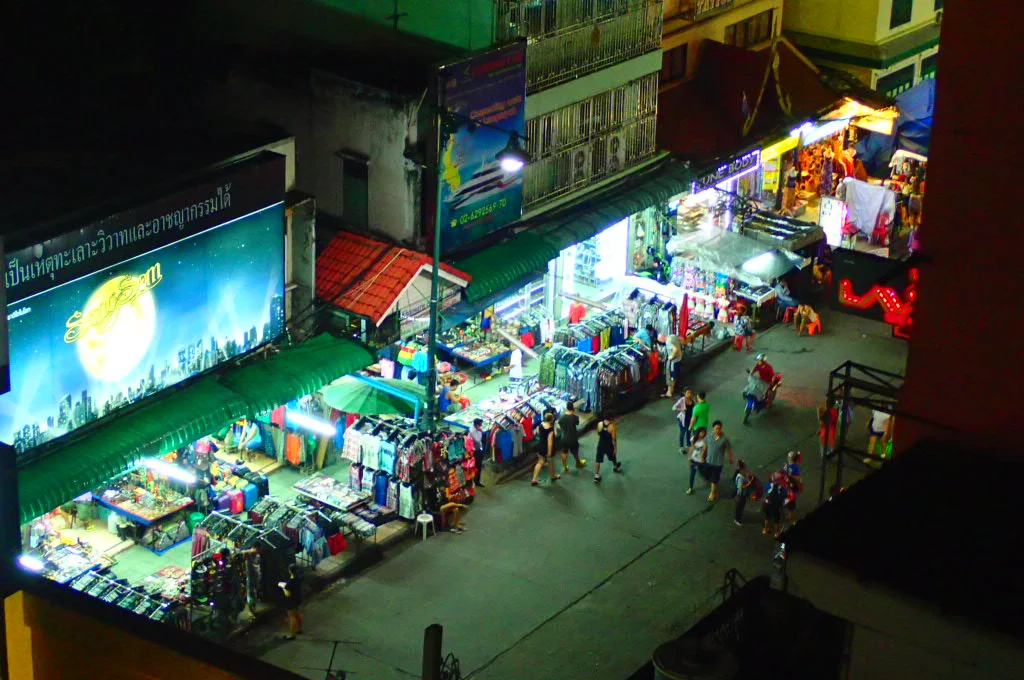
I did my research before arriving in Bali. I only had 2 weeks there before I would return to the USA. I had to make it count. I found out the best diving in Bali was located on the smaller islands to the east. In particular, Nusa Lembongan would have exactly what I wanted. I found out ahead of time as much as I could about how to get there. I landed at Ngurah Rai International Airport in Denpasar at 2 in the afternoon. In only a couple hours, I was across the Badung Strait sipping a mango smoothie on the sand and watching the red sun dip over the sea.
Below I've put together a little question and answer style post about what I learned, both from my prior research and from my first-hand experience, getting from the airport to Nusa Lembongan. There's lots of advice on how to make this process go smoothly if you ever decide to go! If not, you'll get a look at the whole experience which includes insane drivers, unsafe boats, and digging through a mountain of flip flops.