
England
I visited England a couple of times during graduate school between 2010 and 2014.
I went once for a research grant at the University of Surrey and another time to present at a conference.
Occasionally, I reflect back to describe my adventures from back then!

Years ago, I wrote about my experience couchsurfing all over the world. I never talked about how exactly I got into couchsurfing. The story dates back to 2012 when I spent a summer doing research in England.
I took the train into London on the weekends. On my first weekend there, I met a friendly local who decided to take me in on the weekends. In addition to showing me around all over London, he gave me a place to stay with his roommates so I didn't have to travel back and forth.
I did not expect to learn about couchsurfing and become a huge advocate within the couchsurfing community!

We’re going to the archives this week! Back in 2012, I traveled to London to conduct research as part of my social psychology PhD. I had a split life between being an academic all week studying at the University of Surrey and then taking the train to explore on weekends in London.
I initially stayed with one of my friends from California who showed me around some fun nightlife spots in London. But I also explored quite a bit on my own.
One of the first places I went was to watch the Changing of the Guard at Buckingham Palace. Little did I know, it was a very special day to see this daily ritual event. This day happened to be the Queen’s Diamond Jubilee!
France
I finally made it to France for the first time in 2026!
I visited the French Alps, fairytale wine country, and Paris.
It was the perfect balance of what France has to offer.
Iceland
I teamed up with 2 other travelers. We drove The Ring Road for six days.
Iceland is full of rock formations, geysers, waterfalls, and moss-covered everything.
Surprisingly, there are also tons of swimming pools, farmland, and an enormous backpacker community.
![Video Extras [Uncut] from My Icelandic Adventures](https://images.squarespace-cdn.com/content/v1/53b6ec86e4b09a1fb529c6b8/1461209434703-PUV03V33GYI7CZUHKQ2Q/P9041572.JPG)
There is nothing quite like having photos to remind you of the good times from your travel adventures. But you know what's even better? Having video of it.
I was not exactly religious about taking video of my experiences in the beginning of my 15-month journey in 2014 to 2015. I was barely familiar with my new camera during my first stop in Iceland. I also did not really have any ideas in mind about how I should film or what I should film. What resulted was a random selection of moments—what I think perfectly summarize my time in Iceland.
In this post, I share the raw, uncut footage from these moments. You'll see the Blair Witch-style in which I film and you'll get an idea of the carefree mindset I was in. The following are a sequence of videos from the start to the end of my 9 days in Iceland. It includes my starts and stops and the times I let the film roll when I suddenly felt the urge to capture the moment. It's random. It's fluid. And I think I naturally ended up capturing some of the best moments from my time in Iceland.
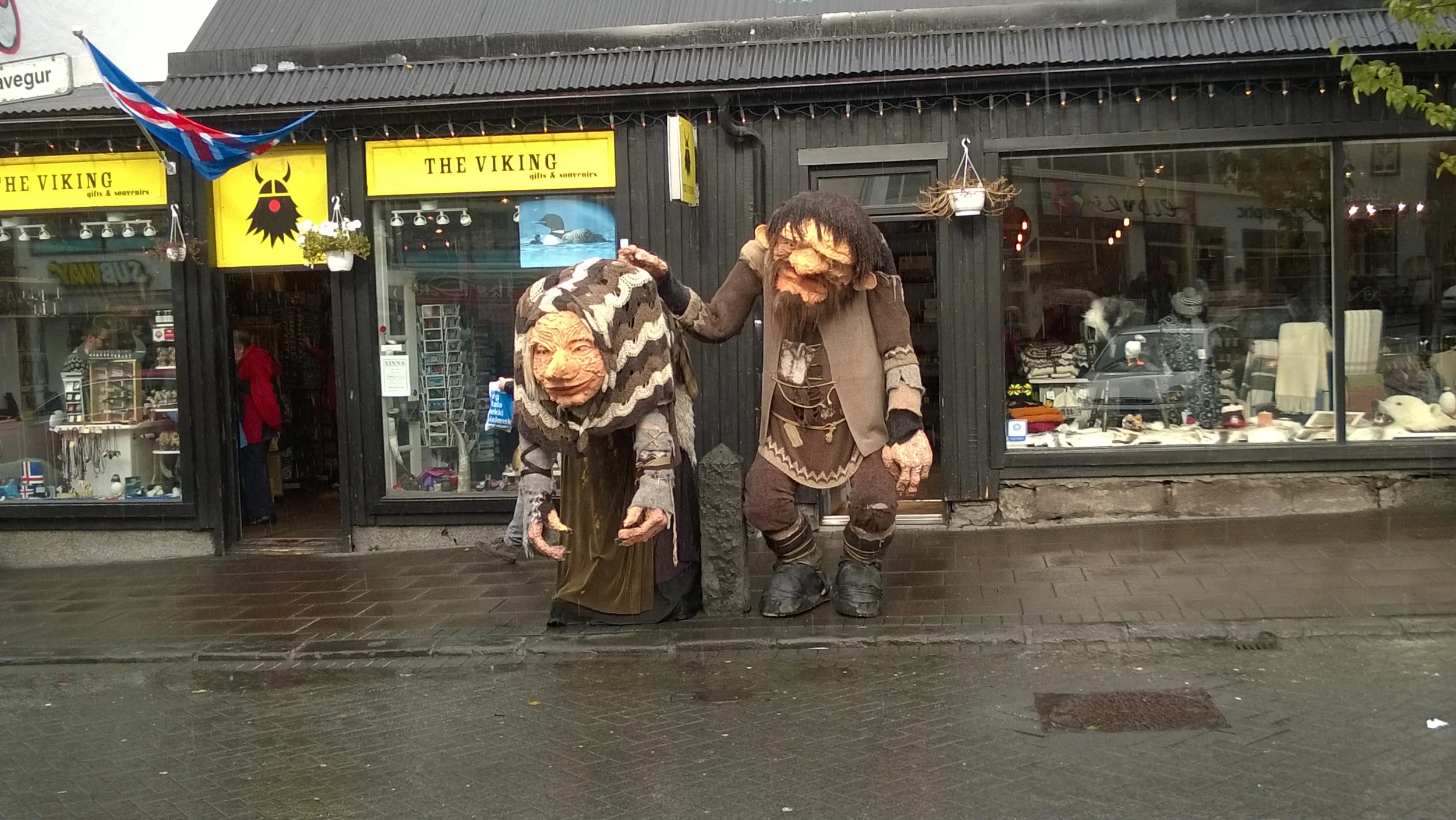
After dropping off the rental car and checking into our hostel in Reykjavik, I had a few hours to spend before the backpackers from Akureyri would be back in town. I took the opportunity to wander and see more of the streets of Reykjavik. I wanted to get a better feel for the city and pick up a few small souvenirs to bring to my hosts in Germany from the shops along Laugavegur. Here are a few highlights.
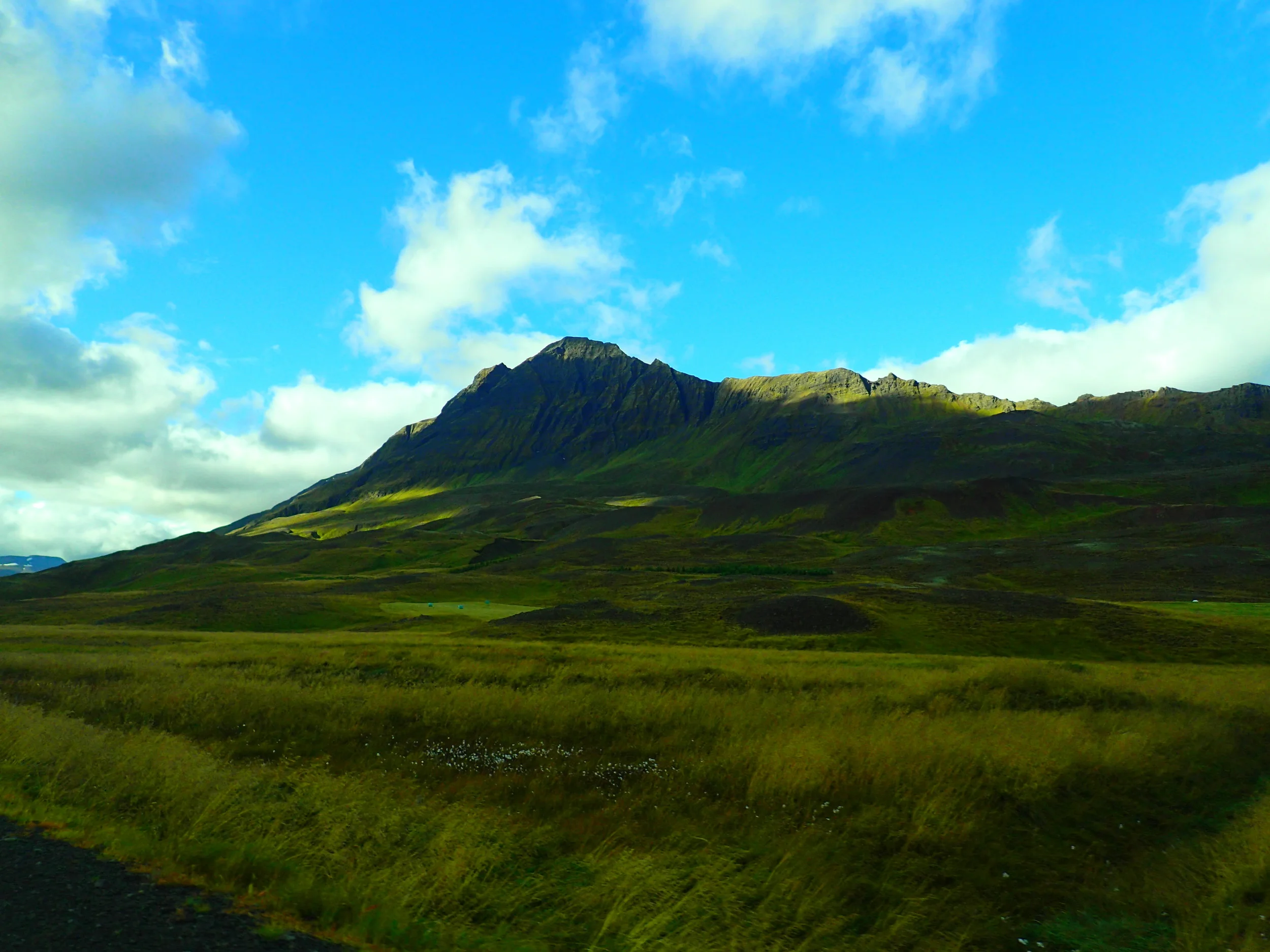
Considered the “capitol of northern Iceland,” Akureyri sits at the Eyjafjörður fjord and is the second largest city with just under 18,000 people. We decided to make it our first and only two-night stopover after Mývatn’s flies ran us out of town the night before. Fabrice and I had no plans except to make new friends again since the group we met the night before had split up and left town—Canada and England were traveling south and France, Germany, and Wales were traveling to the northwest fjords. We had a great experience hanging out with them so we were craving more interactions just like it. Good times with new people can be rather addicting!
Having missed out on the hot springs in Mývatn, we decided to go to the Akureyri public pools. While these were not exactly natural hot springs, they were a welcomed alternative to dealing with the flies! On the way to the pool, we got to witness a bit of the charm of Akureyri. Small parks and cute shops lined the streets.
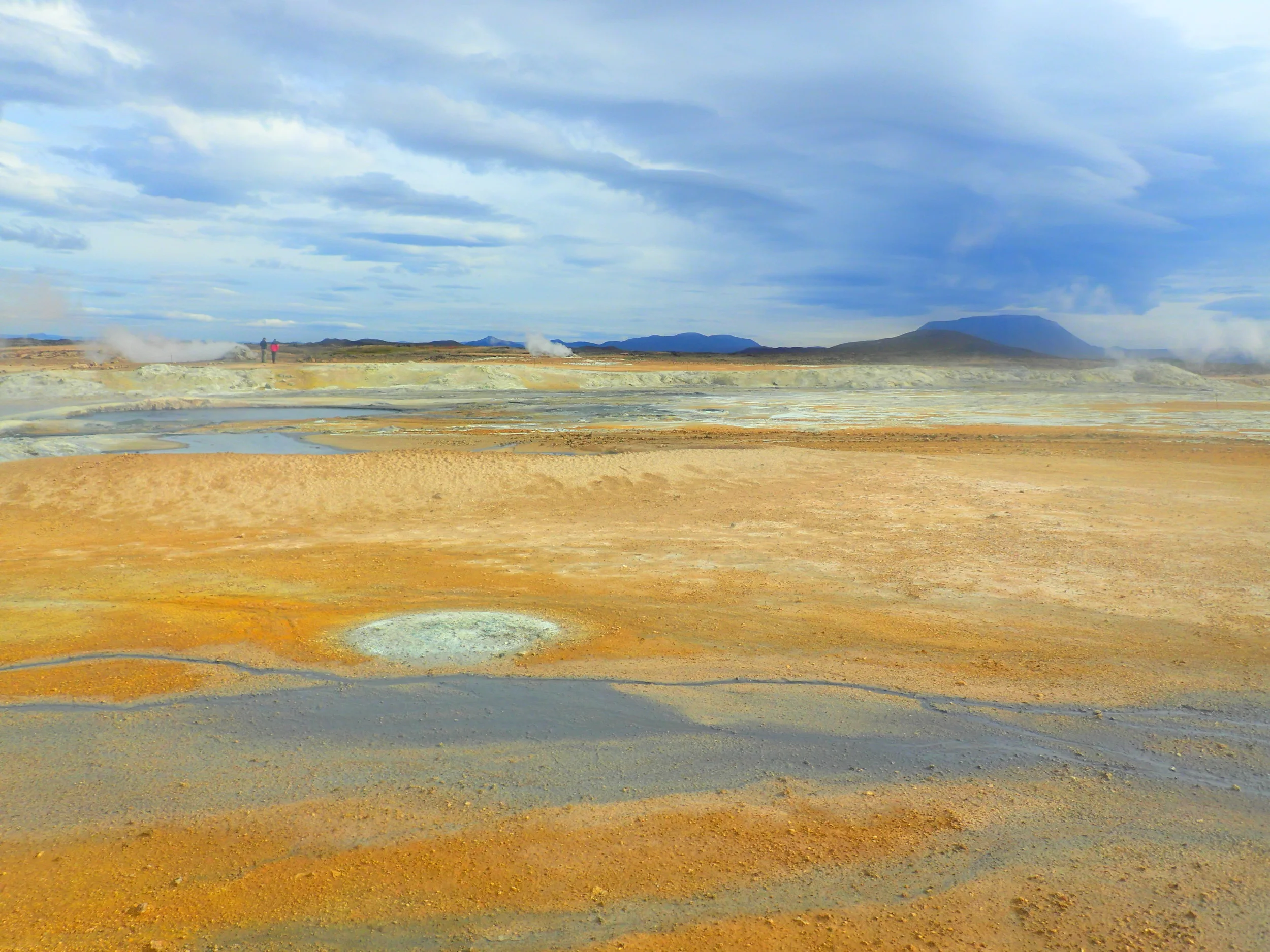
I watched Carolina trot away from the car toward the bus stop in Höfn. It was early in the morning and we had just said our goodbyes. I was excited to learn that one of her stops on her 10-month journey will be New Zealand—one of my main destinations. Perhaps we’ll see each other in a few months on the other side of the world.
Fabrice and I got back to Route 1 to continue our drive around the Ring Road. Today we would have to travel the most distance in one day: 360 km to Lake Mývatn. I had heard there were amazing natural hot springs there—less expensive and less touristy than the famous Blue Lagoon near Reykjavik.
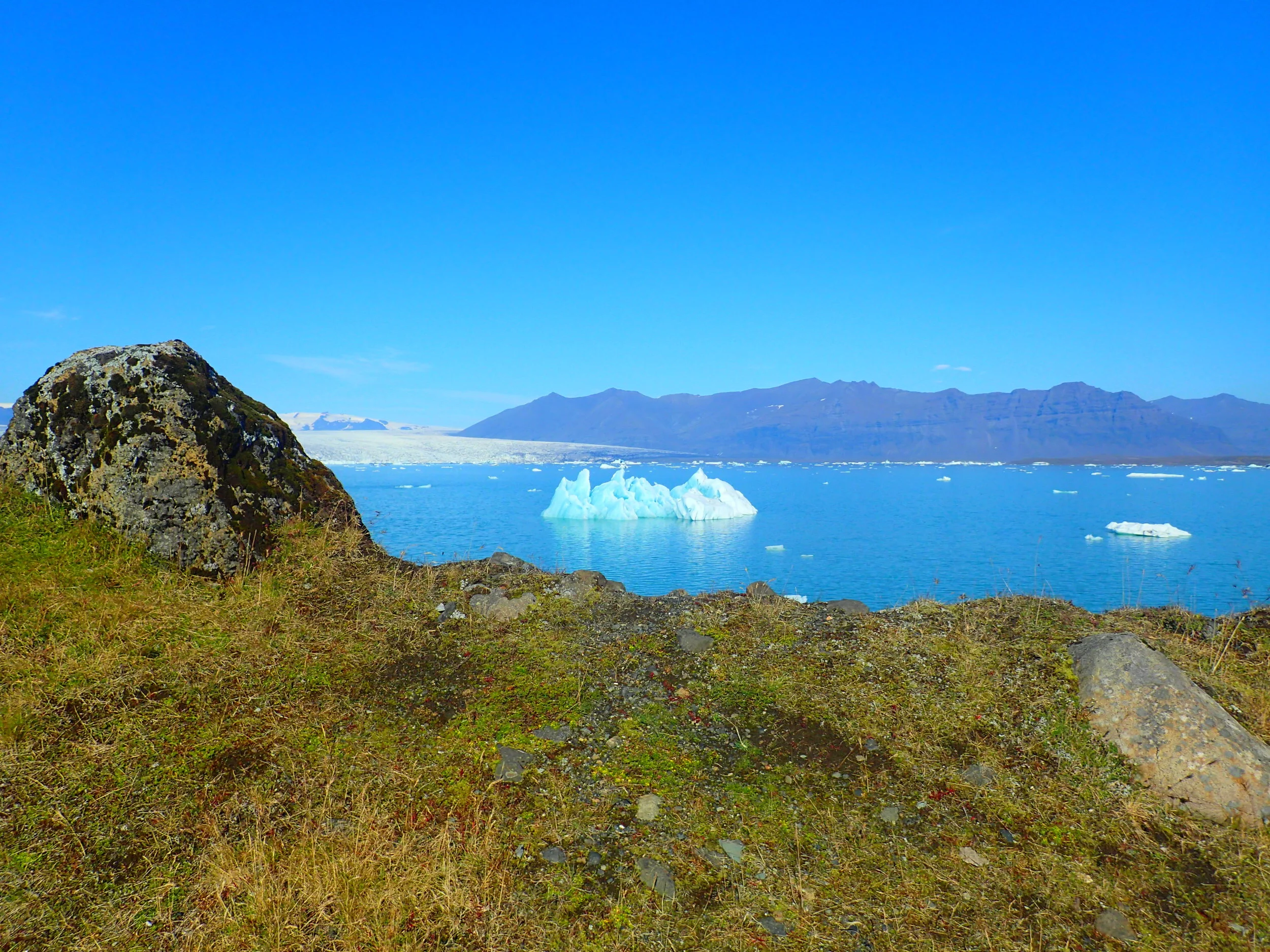
On the dashboard, Earl was propped up next to Fabrice’s phone blaring music from The Nationals. My cheeks felt warm as I squinted out the front windshield at the dark fields spotted with greenish-yellow plants. In the distance we could see Vatnajökull, Iceland’s largest glacier at 8300 square kilometers, emerging from behind craggy mountains in the foreground. As we got closer, we saw many tour buses pulling off the Ring Road to the left. It looked like something to check out.
At Skaftafell, tourists can purchase guided tours of the Vatnajökull glacier and surrounding park area. Many locals told us that walking on the glacier on your own during or surrounding the summer months is never something Icelanders risk—only tourists who do not know the dangers of falling through the ice, never to be seen again. Guides are absolutely necessary and increase your safety significantly, but instead we opted to do an off-glacier, self-guided hike along the Gönguleiðer trails. Up the mountain 30-45 minutes would take us to see another waterfall—Svartifoss. A morning hike sounded good to us all even though we had already seen spectacular falls the day before. Grabbing water and a few snacks, we headed in the direction of the trailhead.
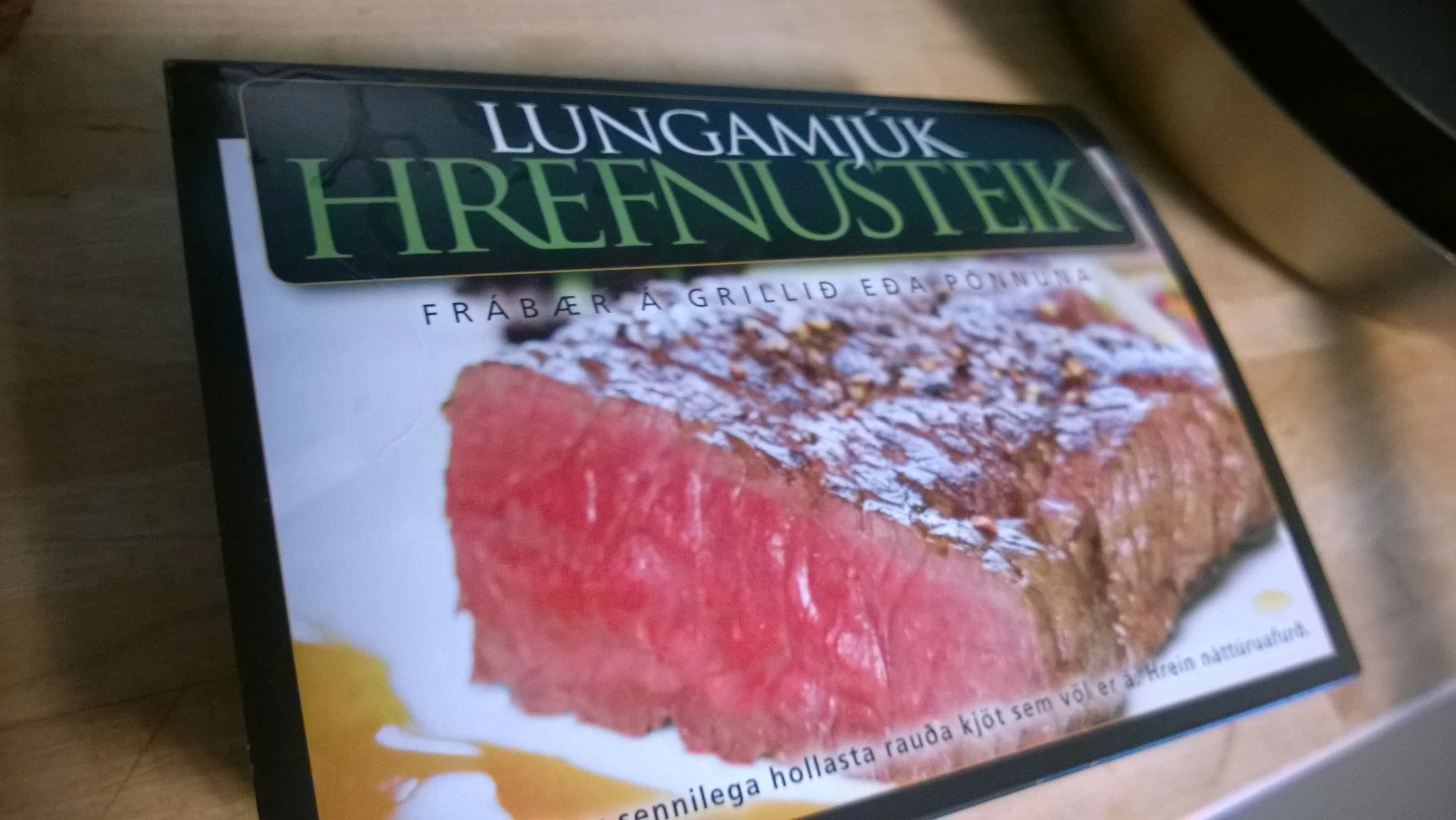
As a foodie I love to try new foods. I also love to learn about a culture by opening myself up to what they eat even if it means deviating from my own dietary norm. Rejecting food from others in a cultural exchange or missing an opportunity to experience a food significant to that culture due to my own choice would, for me, be an injustice. Therefore, I am putting nearly 20 years of eating habits aside for the whole year of deviation trip. I will try anything—even if presented with food I would never consider eating while back in the U.S. My first norm-deviating food experience occurred while in Iceland.
Not much has changed in the diet of Icelanders since the Viking age. The majority of the Icelandic diet comes from what surrounds the country—the sea. Einar, my host in Reykjavik, told me if I wanted to try a snack that locals commonly munch on, then I should try Hvammsfiskur (ravine fish), a type of fish jerky. Not crunchy or soft, this somewhat tough, dried fish reminded me of tilapia but slightly duller in flavor. If I had the opportunity to eat more I probably would as I enjoy the taste of fish and it’s a very healthy snack.
I laid in my top bunk under a hand-woven blanket watching the sunlight trickle in through the far window. I smiled to myself as I heard the light ba-ah-ah-ing of sheep in the distance mixed with the faint breathing of my two new friends laying in the bunks next to me. We had all stayed together in the same room the night before even though we could have each had our own room in the place. I had chosen the room on the east side strategically so the sunlight would warm me up in the morning. What I did not anticipate was the emotional warmth I would feel when Carolina and Fabrice decided to stay in the room with me. We were becoming fast friends, and now it was like we were children away at camp together.
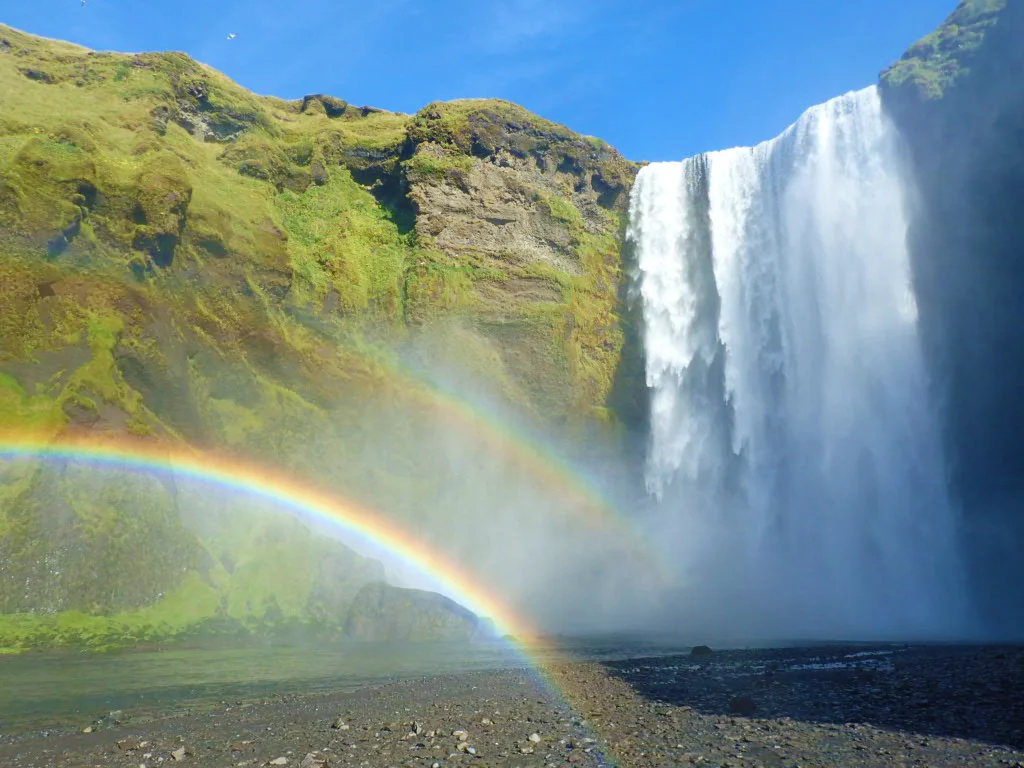
The day before we began our Ring Road trip by detouring around the Golden Circle. Today we planned to get back on Route 1 to see some waterfalls before reaching Vik for the night. Today was also the day that I was to learn how to drive manual—finally! I had always wanted to learn. Most cars for rent (especially the less expensive ones) are manual in Iceland. So with Fabrice and Carolina as my teachers and nobody around on these country back roads, this was my opportunity.
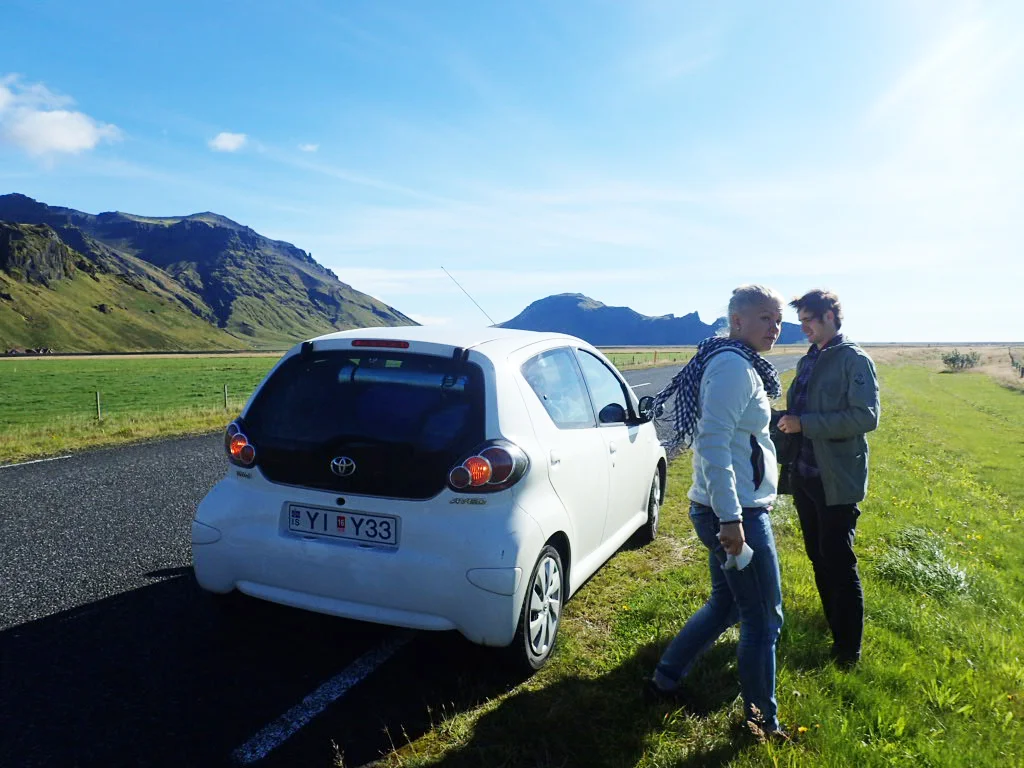
On Thursday, September 4, I met Fabrice (Quebec) at the Egilsborg guesthouse. We were handed over the keys to a white Toyota Aygo for just $60 a day. We picked up Carolina (northern Sweden) from Einar's place in Breiðholt and set out on Route 1 to go counterclockwise around the Ring Road (Route 1). We decided to take an initial detour along the Golden Circle first. This path would take us to many special sites and wonders despite having to go slightly out of the way of Route 1.
Every kilometer there was something new and beautiful to look upon. Thew constant spectacular views made the decision to stop and take a picture of what and when very difficult. What a dilemma, right? The first time we stopped the car to take pictures was when we first emerged from Rekjavik. Outside the city, the land suddenly stretched out to reach mountains surrounding us. Fields were dotted with cute homes, churches, farm houses, and animals (sheep, horses, etc.). We were instantly awe struck and had to stop the car by a little bridge just to stand outside the car and take it all in. Little did we know, this was only the beginning of what we were about to see over the following days.
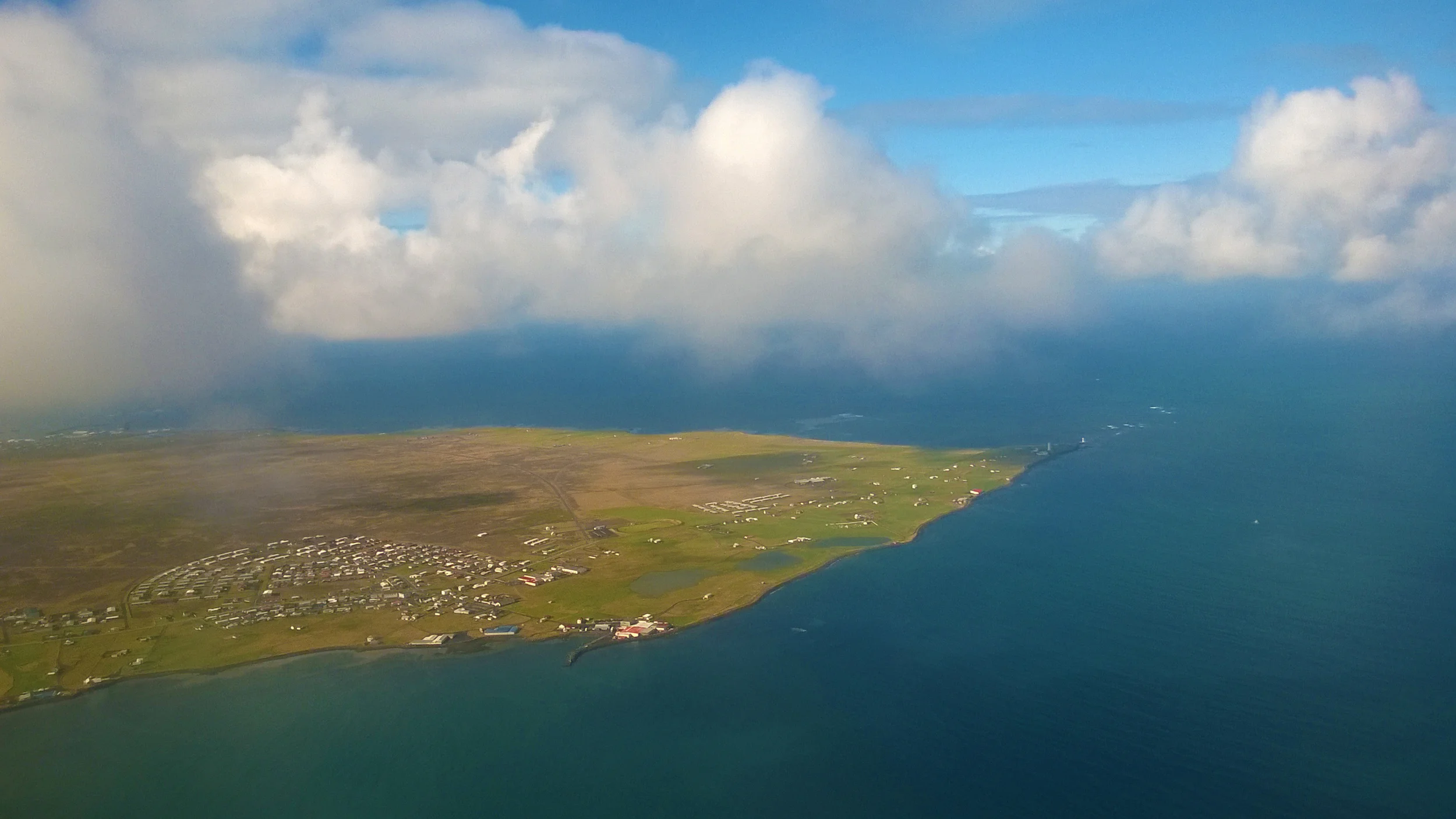
I squinted into the morning sun and watched puffy clouds float by outside the plane window. My insides leapt as the clouds parted revealing Iceland: a treeless green mass jutting into the sparkling sea. The pilot switched from speaking Norwegian to English announcing our descent into Keflavik International Airport in Reykjavik.
After landing, I fastened my backpack buckles around my waist and raised my chin ready for whatever adventures laid ahead. I grabbed a local SIM card at the airport Duty Free, bought a bus ticket, and headed outside to the bus stop. A young Icelandic Excursions bus driver wearing reflective aviators took my bag and told me he could drop me at the Mjódd station. We shared an exchange over our matching sunglasses as I boarded. I said, “Nice sunglasses!” He laughed, “You, too!”
Germany
Travel is the perfect time to connect with yourself and all that makes you, you!
So I got in touch with some relatives I had never met before and ended up staying with them across the country.
I learned about German and Bavarian culture and discovered my family history along the way.
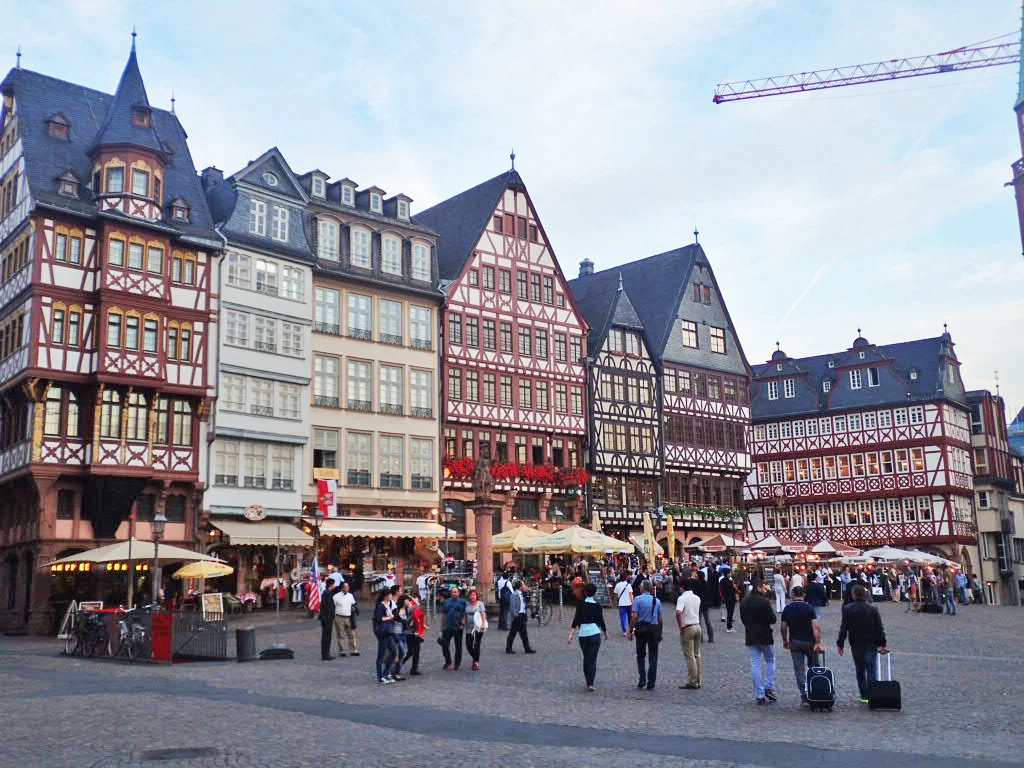
I was in Germany for 6 weeks and traveled from cities to countryside visiting Bielefeld, down to Cologne, then Frankfurt, Munich, Regensburg, and finally up to Berlin. After spending so much time in Deutchland, I feel like I got to know the country very well. By the end of it, I had a pretty good idea of what I absolutely adored and you can see this in my many enthusiastic posts about Germany.
There are still many positive aspects of the country I missed mentioning, such as how much I appreciate Germany’s commitment to providing free education to their citizens, the just amount of historical responsibility they demonstrate through the many memorials to holocaust victims found all over the country, and their high standards for education requiring even carpenters and plumbers to go to college and obtain a degree in their trade to begin work in that field.

Dance and music have always been a big part of my life. A secret bit about me many people (and most readers) probably do not know is I was a tap dancer for 17 years. I also played flute in my school band for 7 years. More commonly known is my love for going to local music shows, dancing around to alternative rock and punk or bopping along to singer songwriter’s jams. I went out to dance and listen to live music often while living in NYC for the 6 years it took to complete my graduate degree.
With all of this music in my life, I couldn’t miss out on Berlin’s nightlife scene where music and dance is rather unique compared to much of what I have experienced back home. I was elated to find myself being transported back to the 1920s at a social dancing night, party with some French synth pop artists, and even get into Berlin’s famously exclusive nightclub, Berghain.
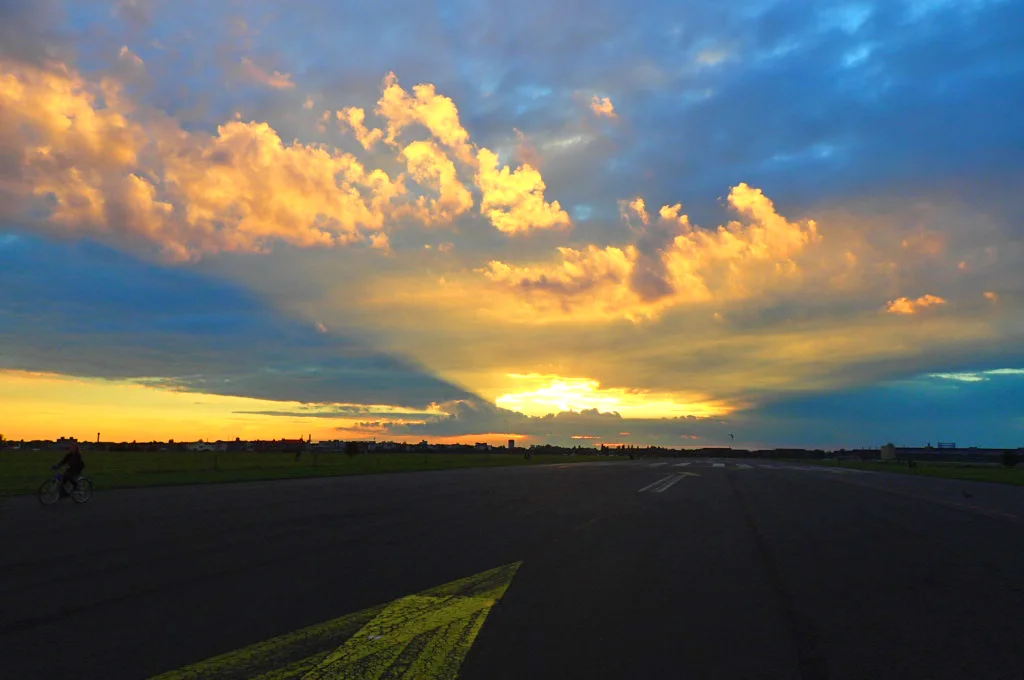
Typically, an airport tarmac is filled with airplanes, luggage transport cars, and people directing plane traffic. Berlin’s Tempelhof deviates from this airport norm, however. In 2008, in an effort to reduce air traffic in Berlin, the airport closed down. Since then, the airport has been turned into a space for large fairs, tradeshows, and festivals. Berliners have also reclaimed the Tempelhof as a park, but the people of Berlin had to take to the streets to keep this space open for public use.
Initially, the city mayor had the vision to build a shopping center, condominiums, and plazas in the big empty plot. These plans were quickly extinguished. As I’ve written before, the people of Berlin despise such gentrification and they protested against it.
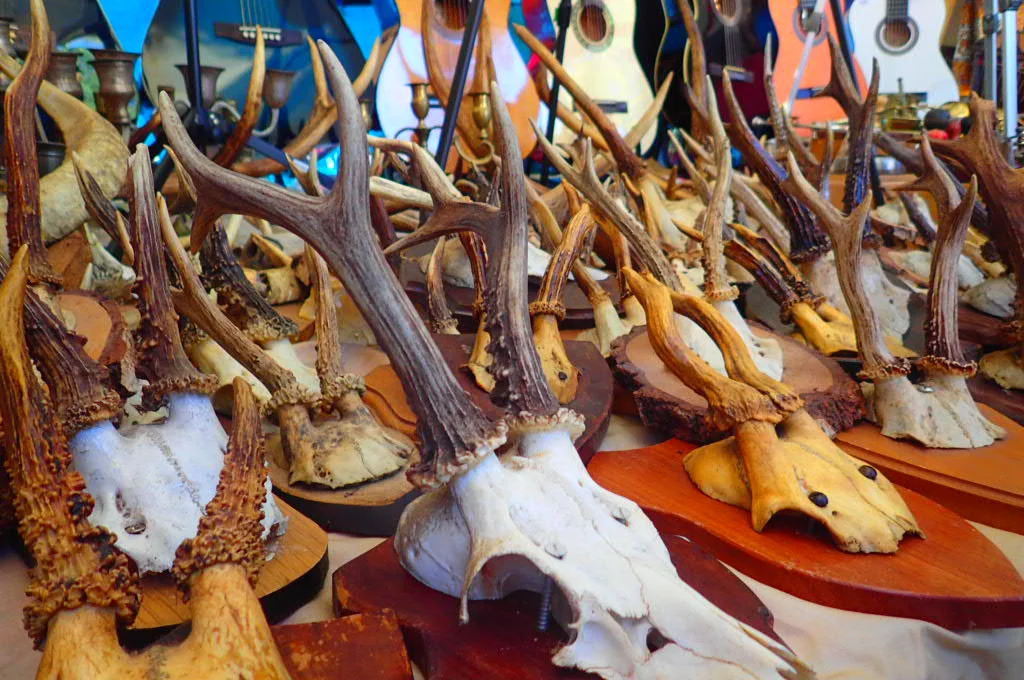
When I travel in big cities, I love to gain insight into the city’s culture by seeing what’s for sale at local flea markets. In Berlin, I visited one small and one large flea market event on consecutive Sundays. But if you’re not tired out from the first, you could easily visit both in one day!
Sundays in the south of Friedrichshain-District, there is a small flea market circling a “box” or block. Make it your first stop, but give yourself enough time! I told my buddy Frank to meet me in half an hour so I’d have time to make my way around. By about half way through, I had to quicken my pace and skip over a lot in order to meet him on time. There was just so much to see!
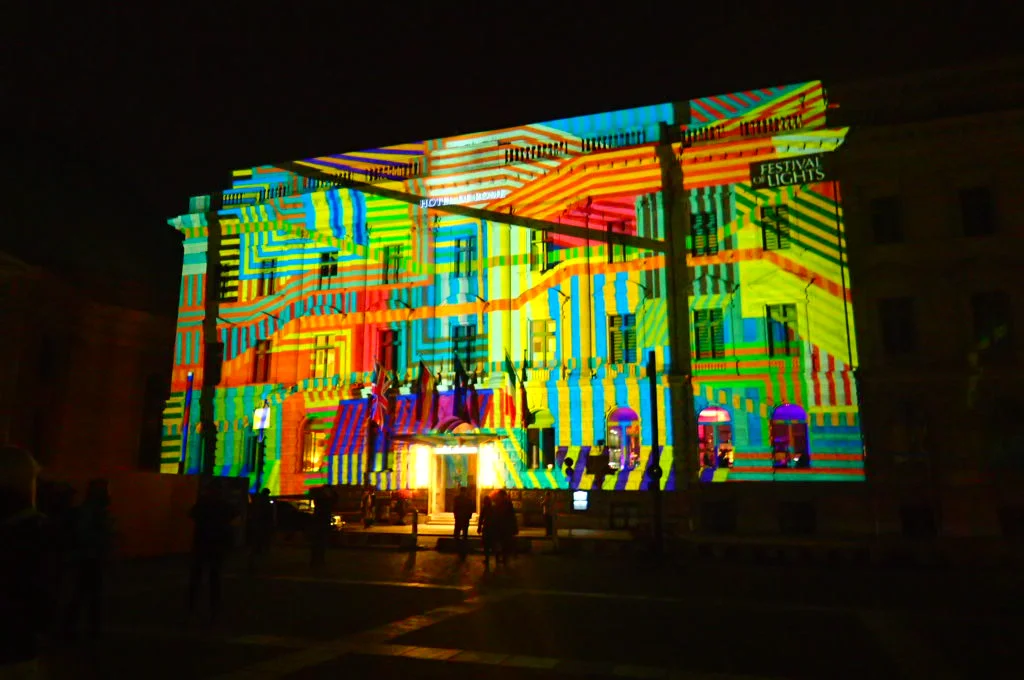
The night marked the first of Berlin’s 10th annual Festival of Lights. Buildings all over the city are lit up with colorful lights and video displays. Most of the city gets into it beyond just these buildings. Tree-lined blocks are lit up by colorful lights and neon cars for hire will pull you all over the city to visit each landmark’s light show.
I was lucky enough to be in town for its opening ceremony and planned to meet a bunch of random couchsurfers who were organizing to meet for it. So far in my travels, I’ve found couchsurfing events to be a fun and easy way to meet local and foreign others while traveling solo. This was the first night I learned how these meetups can go awry.
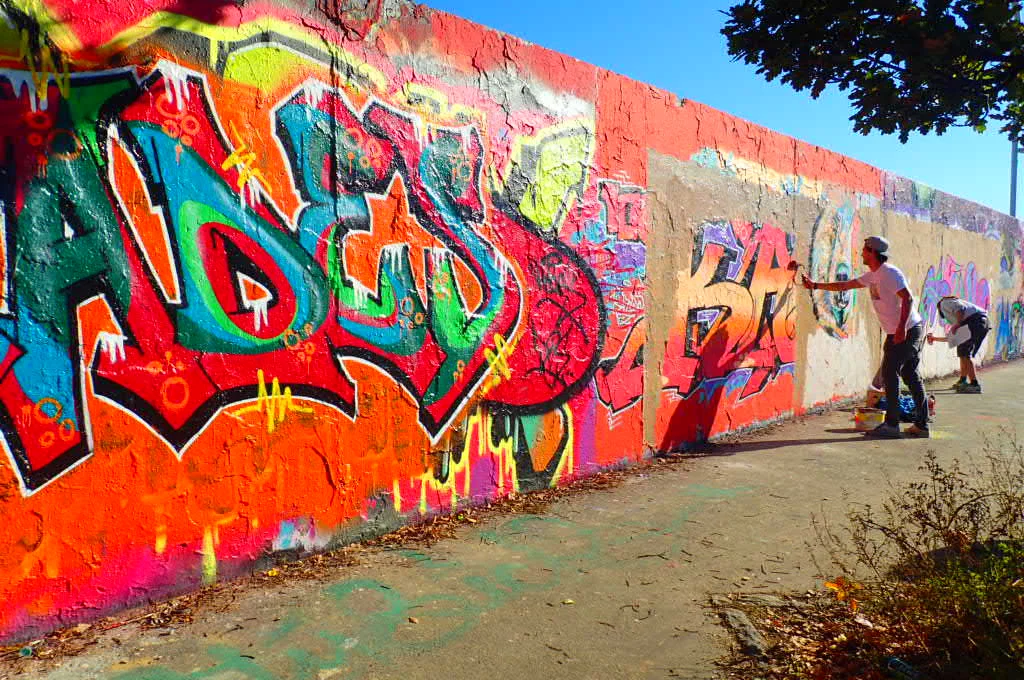
I spent 2 weeks visiting Berlin where I stayed in the neighborhood of Kreuzberg. I walked all over this neighborhood and got to know it very well. Walking around there, I couldn’t help but notice all of the amazing street art everywhere I looked. While I could admire the street art for what it was, I knew absolutely nothing about any of it. Who did it? Were they allowed to paint there or was it illegal? Is it valued by locals or seen as a defamation of property?
ll of these questions and more were, thankfully, answered by going on a free (tip-based) walking tour with Alternative Berlin. This tour was perfect for getting an authentic, off-the-beaten path understanding of the Kreuzberg neighborhood and culture. Guided by an Australian turned Kreuzberger/Berliner, I learned so many stories about the counter-culture and community of Kreuzberg, including its street art, squatter settlements, neighborhood resistance against capitalism and authority, and much more. I gained so much respect for Berlin and its people as a result of the knowledge I gained from this tour. So I am very excited to finally get to share these stories now!
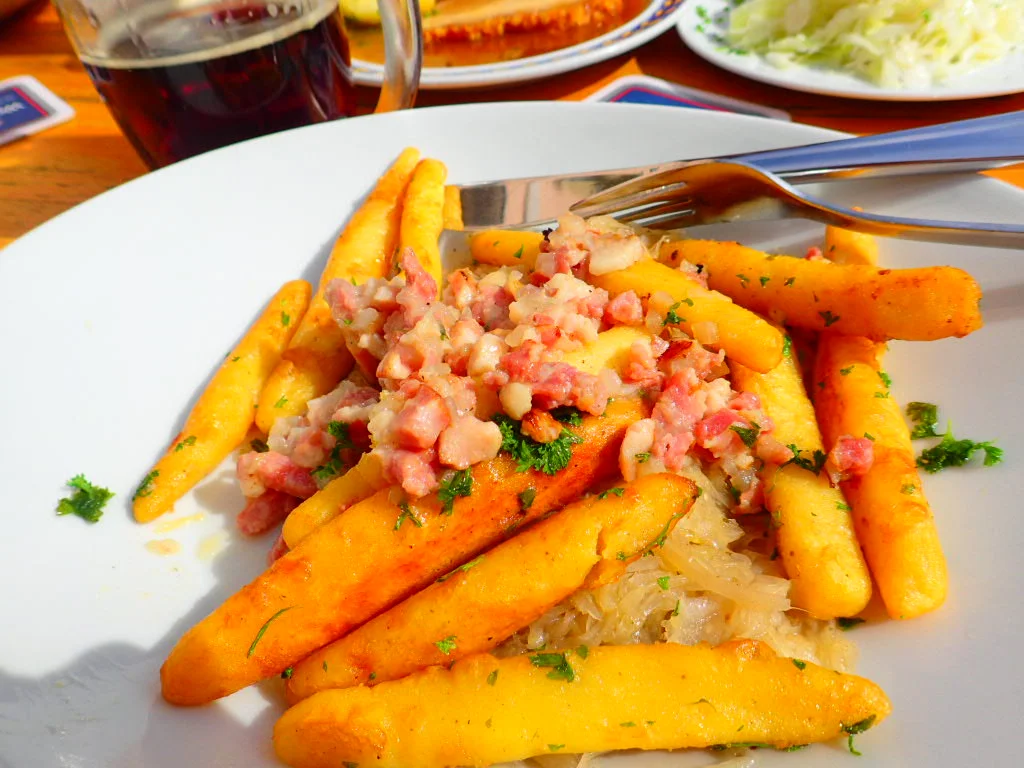
I ate and drank so many new foods in Germany, I already had to start describing some of it in previous posts, like the weisswurst mit brezn I had at Oktoberfest or the flammkuchen I had at the Rhein in Flammen. But there was so much more!
As a foodie on the road, I always want to try the foods unique to the place I am visiting. While German food is incredibly hearty and tasty, I’ve learned there is such a thing as too much of a good thing! I am fairly well known among friends and family for eating very healthy (when I’m at home). For breakfast, I typically eat a very light meal of yogurt and granola or cereal. On weekends I have egg and a small slice of toast. Germans, on the other hand, go wild with bread!
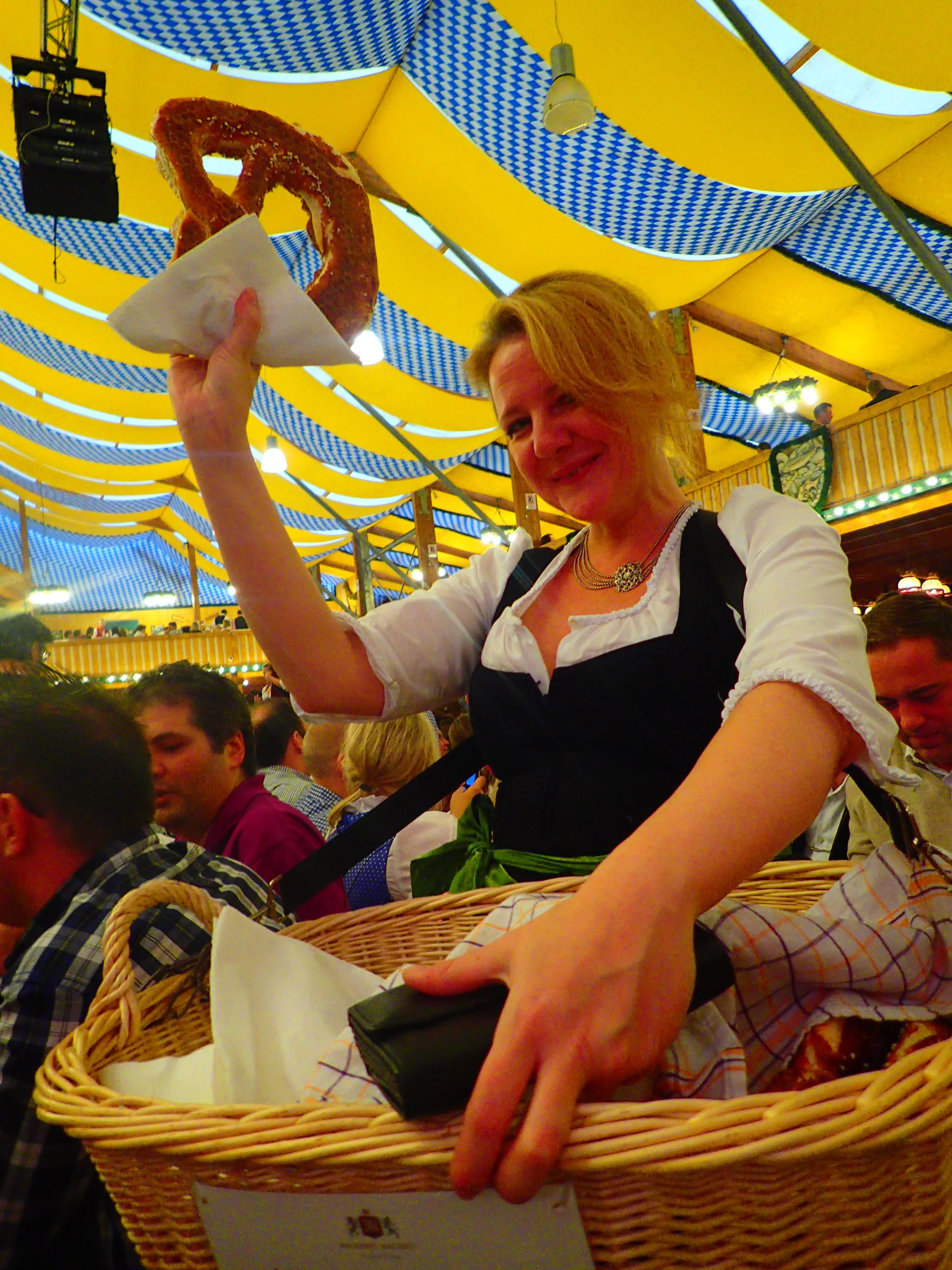
When I realized my trip to Germany was perfectly timed with the annual Oktoberfest, I knew I had to go. As a New Yorker, and specifically a former resident of Astoria known for its Bavarian beer gardens, I was already well aware of what Oktoberfest is all about: drinking beer. But my visit to Oktoberfest in Munich, the birthplace of the event, proved I was only partially correct. Although copious amounts of beer are consumed, Oktoberfest involves so much more than just the beer!
Oktoberfest, locally known as Wiesn, began over 200 years ago when Prince Ludwig (later King Ludwig I) and Princess Therese of Saxe-Hildburghausen were married. The celebration of their marriage took place on the same field as the festival in Munich today but with horse races as the main attraction. When they repeated the horse races the following year the event was dubbed Oktoberfest. Each year that followed, more shows, attractions, and carnival booths were added to the festival.
I took a while to post this time because this may very well be the most personal one I’ve written yet! The more personal, the more careful a writer I am—so that's a good thing! Although this post is personal, I do hope others will find the history described here interesting or even relevant to their own lives. People travel for all sorts of reasons. Tracing a family history is just one reason, and it only applies to why I chose Germany as one of the stops during my year of deviation. I hope this post resonates with those of you who maybe have traveled for this reason before or perhaps you are aspiring to do so one day as well!
Lots of people have grandparents in their lives for a large chunk of their childhood and sometimes even into adulthood. Some are less fortunate to ever have any in their lives at all. I was fortunate enough to have two grandparents on my father’s side, Arthur and Shirley, and my grandmother on my mother’s side, Josephine, for at least part of my childhood. They all died by the time I was 12.
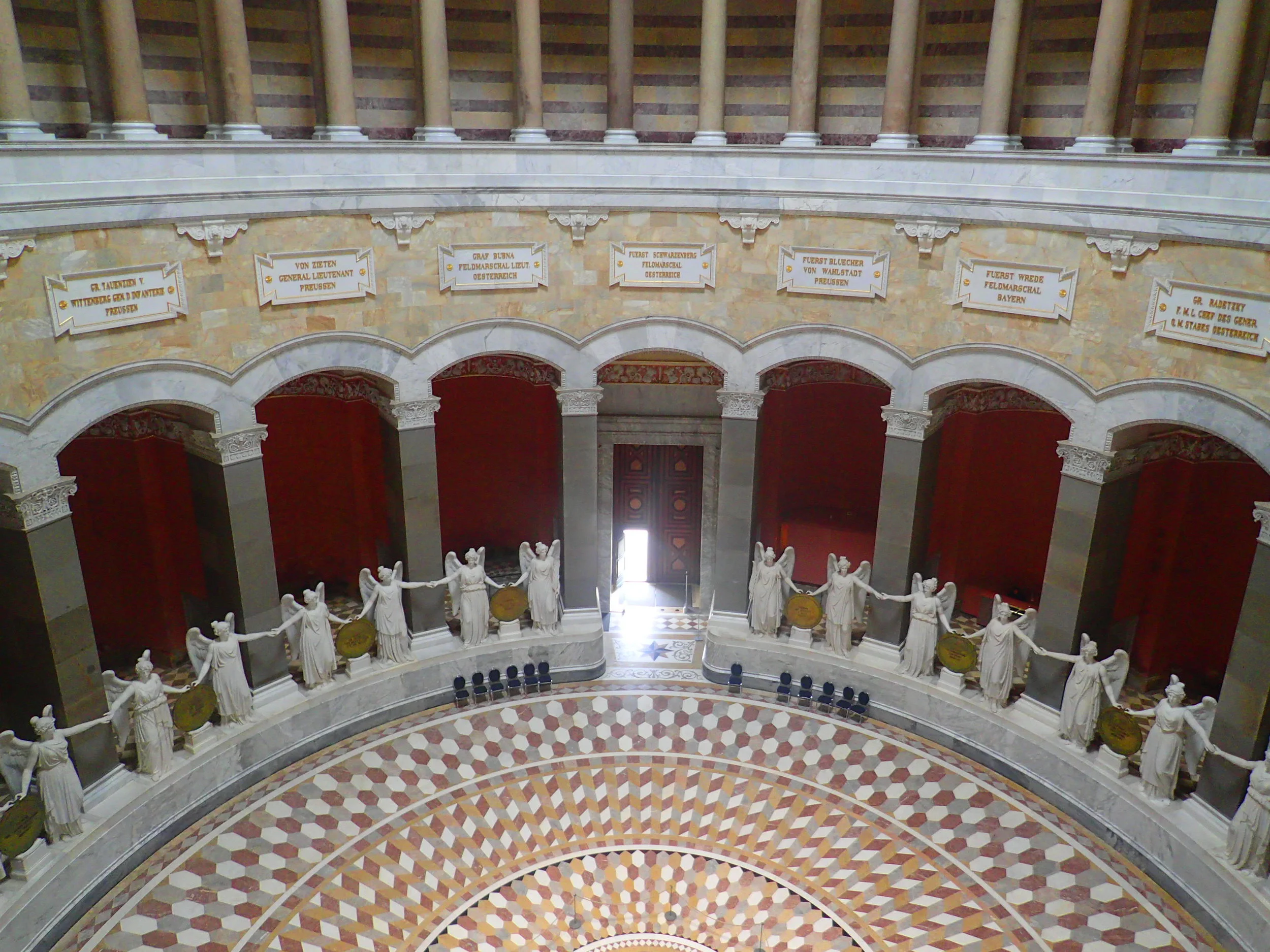
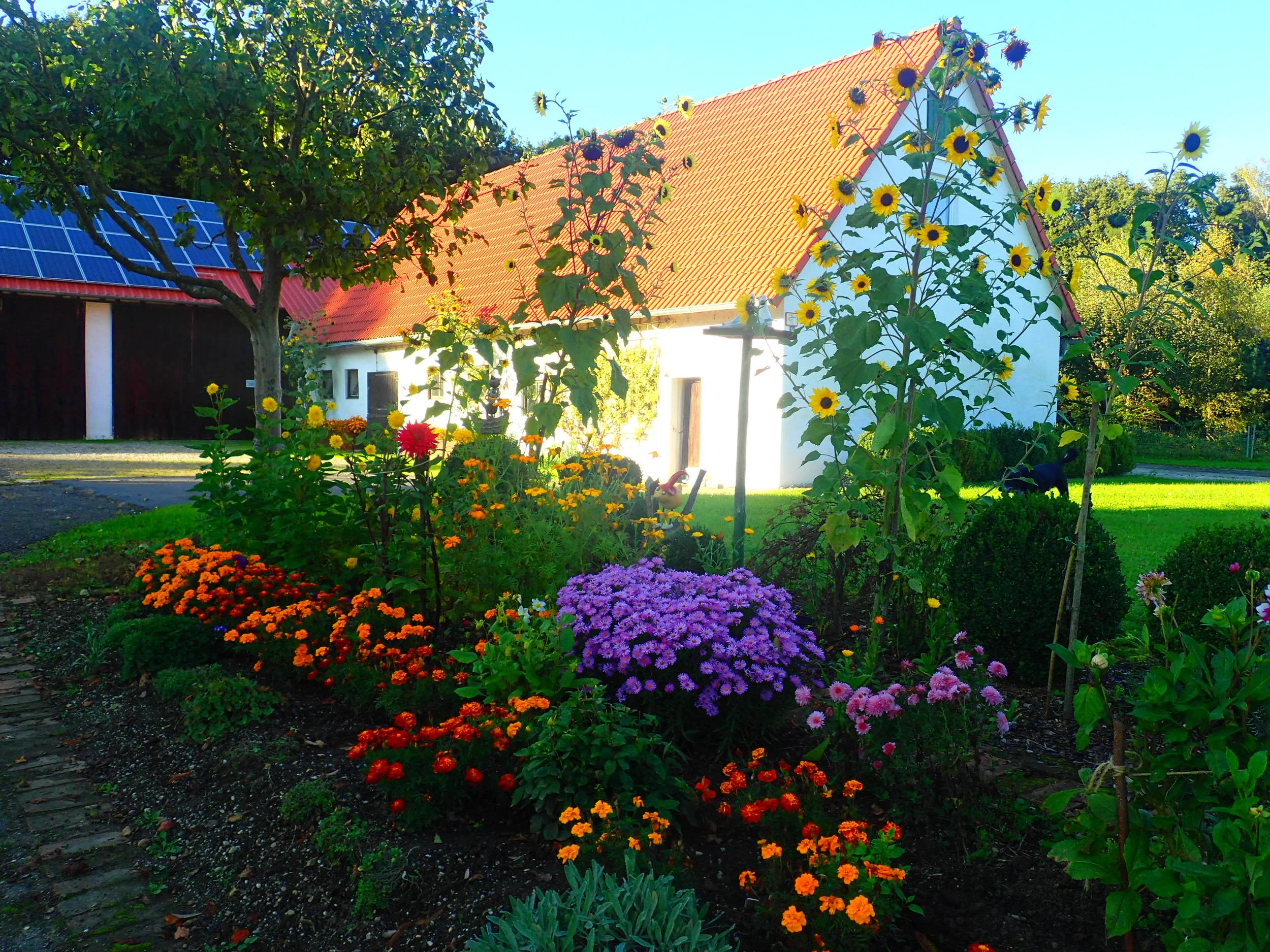
While staying with family in the southeast part of Germany, I had the opportunity to visit local attractions and gain a bit of insight into Bavarian history. Aunt Wally, my grandfather’s sister who lives now in upstate New York, was responsible for contacting my family members in Germany and telling them to take me to these places around Bavaria, making these day trips extra special for me. Here are some of my favorites.
On a grey morning, my cousin Uli and I drove south toward the border of Austria. As we sped down the autobahn, the Alps grew from a faded outline to massive growths stretching blue against the horizon. We made it to Chiemsee, a huge lake with two islands. King Ludwig II’s infamous palace, the Herrenchiemsee, is located on one of these islands. The ferry boat, ironically named Josef (my grandfather’s name), took us on a short ride from the docks to the island called Herreninsel.
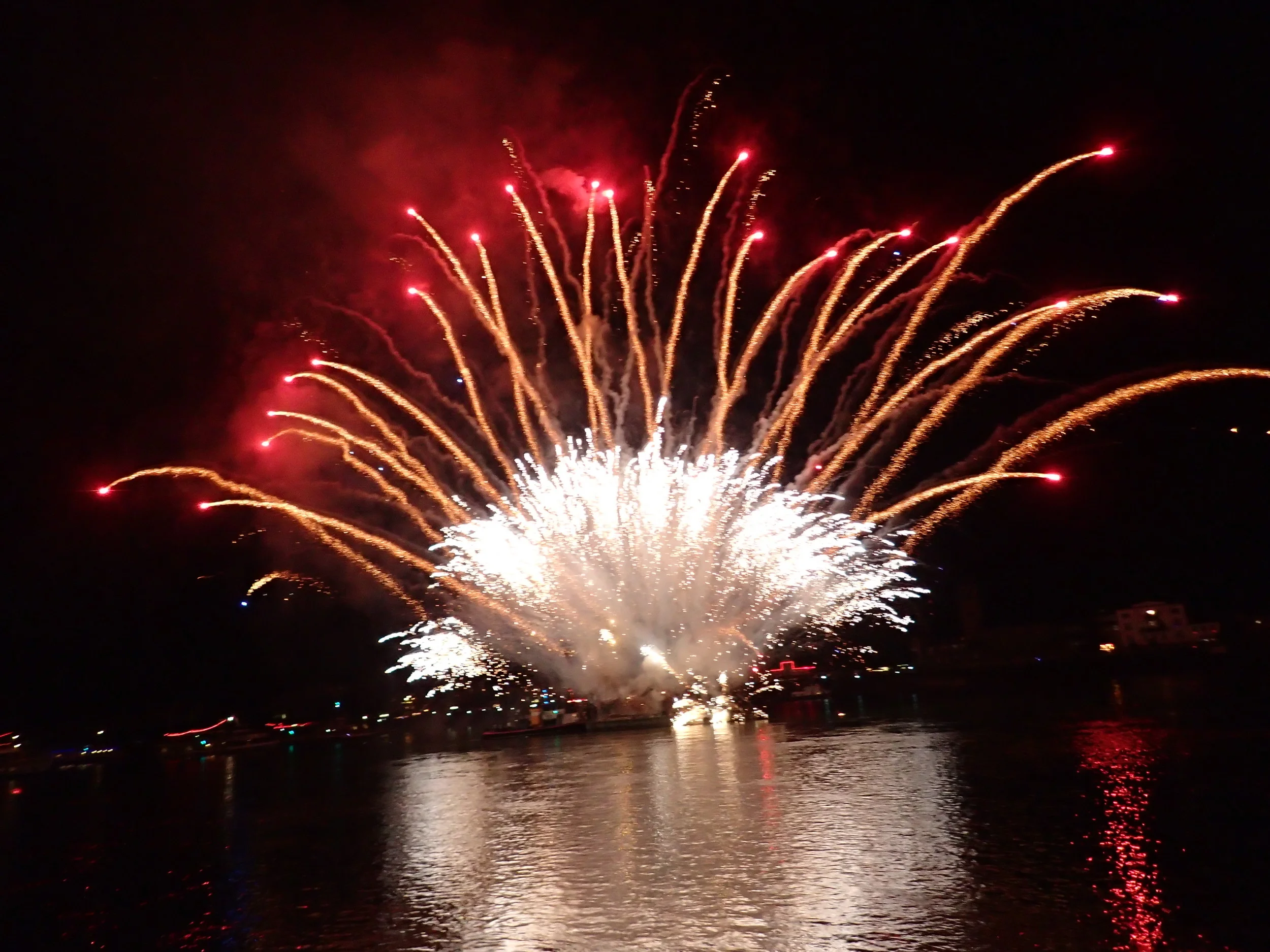
“Do you want to go camping this weekend?” my friend Steffi asked me. The message came a few days before my return to Frankfurt after a week-long visit with family split between the two German cities, Bielefeld and Cologne. By chance, Steffi had found out the last of five Rhein in Flammen events of the year would be taking place the weekend I would be staying with them. Rhein in Flammen is an annual event every year in the summer involving fireworks and wine festivals at different locations along the banks of the Rhine.

My cousin Frankziska and her husband Stephan and I were out for the day walking around Bielefeld, Germany’s 19th largest city known for its University. We had just visited Sparrenberg, a castle built before the 1250s and mostly destroyed in WWII. The castle had been rebuilt and you can still see parts of the original structure on the grounds and if you take a tour of the cellar. I enjoyed this castle mostly because the views of Bielefeld were beautiful, and also because of its very typical castle look & feel. Sparrenberg felt a little like a Camelot but maybe that’s because there were two men practicing sword play below near the castle walls. The nerd in me was thrilled to watch them.
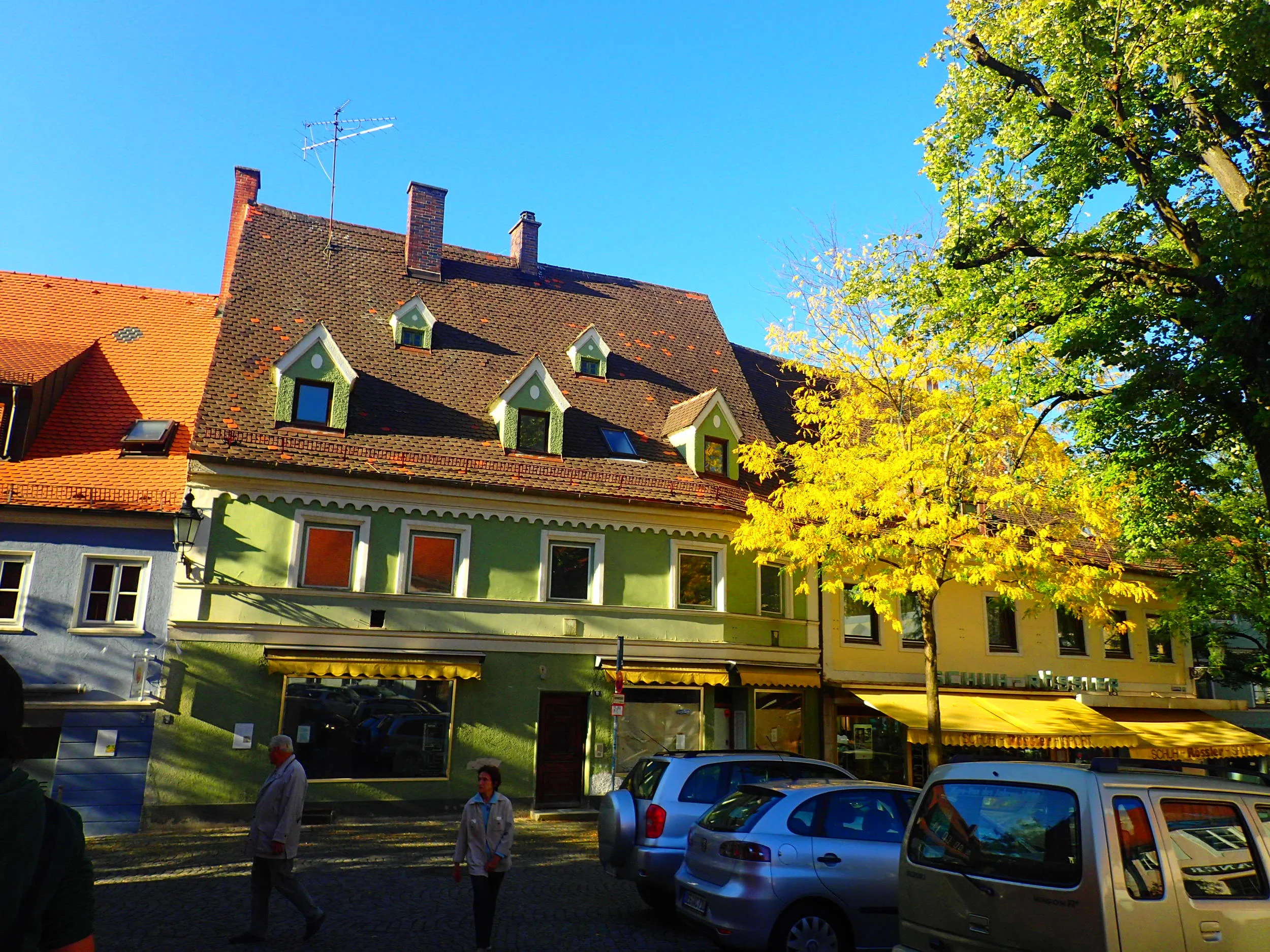
The name Dachau typically conjures up horrible images among foreigners. Among Deutschland natives, the name brings up feelings of shame about Germany’s past. When I told others I was going to be visiting relatives in Dachau, they usually looked at me quizzically before asking, "Oh! So you’re going to visit the concentration camp?” Yes, Dachau is the name of one of the most infamous concentration camps in Germany. Yes, I did visit the camp during my stay. But Dachau is not only a concentration camp—it’s also a town populated by over 45,000 people. Two of those people are my cousin and her partner.
The both of them are well aware of what comes to mind whenever Dachau is named. They told me Dachau residentsdrive and park their cars around Germany and the rest of Europe at their own risk. With license plates sporting the name Dachau from local dealerships, resident’s vehicles have been known to be vandalized as a result of the strong emotional response tied to the town’s name. Declaring hometown pride for Dachau must be challenging for residents. I certainly can understand the difficulty seeing the name stamped on someone’s car, like a badge of hate. At the same time, it's important to realize the name also represents a small town along the River Amper in Bavaria. This is why I’ve decided to write about the concentration camp and the town in this post.
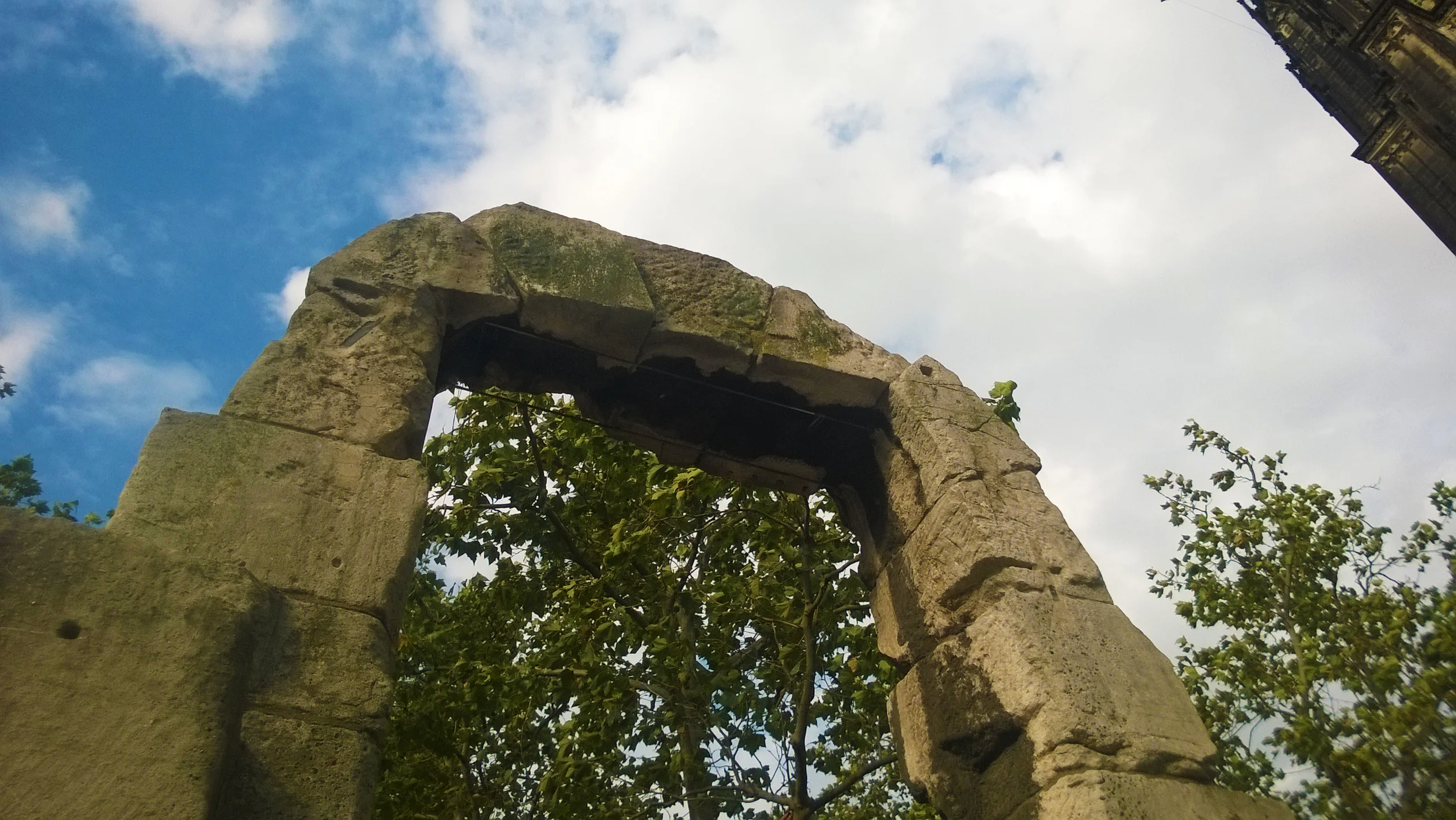
I have seen and done so much in Germany since I arrived here nearly 3 weeks ago, it’s difficult to determine where to begin writing about my second country on the year of deviation tour. I’ve traveled from Bielefeld to Cologne to Frankfurt to Munich to Regensberg – and that’s just half of my time here so far!
Instead of going chronologically, I’ve decided to do some highlights starting with a list about things you must do in the city of Cologne (Köln). I spent 3 days staying with relatives in a small town about a 30-minute train ride into the city center. Cologne was mostly destroyed in WWII, but some historic gems remain, and many modern sights and cultural features together make Cologne a great introduction city to Germany.
Greece
After a 2.5 year global pandemic, I finally got back into international travel starting in the Greek Islands.
I went to Crete, the biggest of the islands, to hike, visited incredible beaches, and enjoy the culture of Chania.
Then I headed to touristic Santorini to check out the classic Cyclades-style architecture and coastal sunset views.
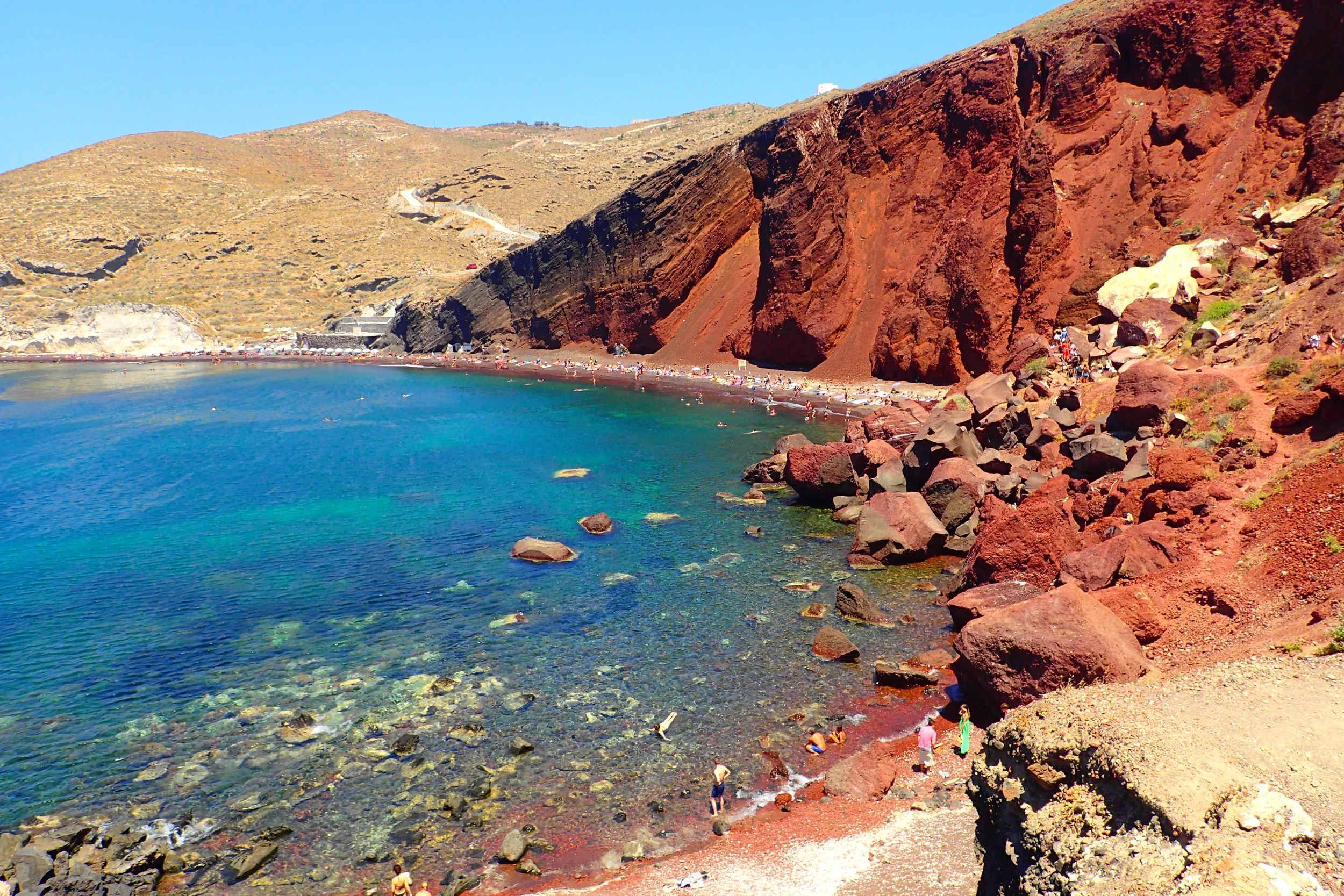
Taking a little break from Costa Rica this week to bring you some extra content from my trip to Santorini!
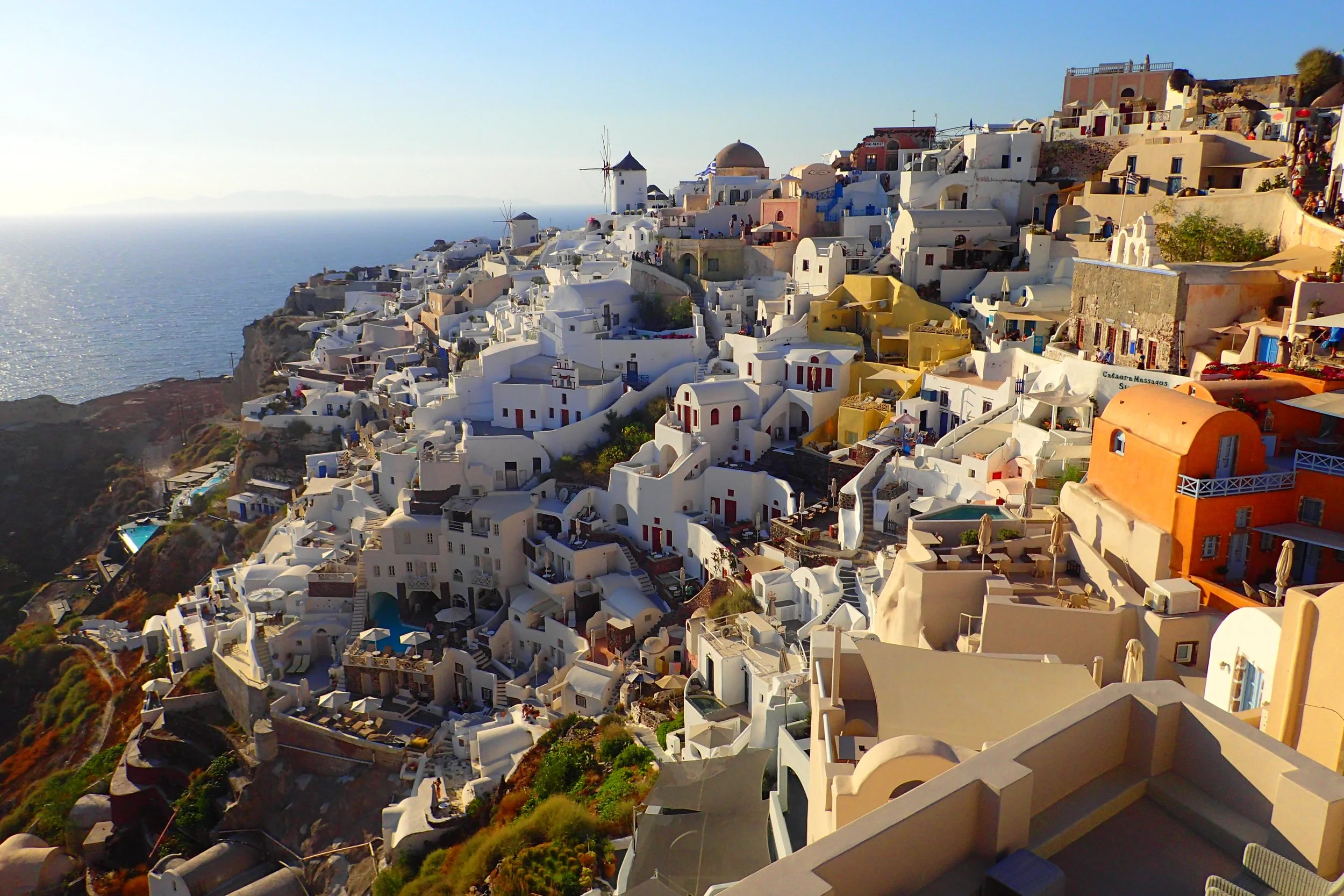
On our last day in Greece, on the island of Santorini, Carolina and I decided to explore one last area. The Akrotiri peninsula includes a few nice highlights that are worth the bus ride down for part of the day.
We went to the red beach and to the Venetian Castle of Akrotiri. Both of these were free to visit. We had the option to also visit the Akrotiri Museum but we opted not to. Sometimes there are certain highlights that I choose to pass up on trips especially when they cost money. The fee and not feeling enthusiastic enough about the museum turned us away.
Otherwise we had a nice visit to Akrotiri before we departed for our next adventure in Sweden and Norway!

Our Fira host, Alex, recommended to us a secret place to get in the caldera waters in Oia. He showed us on a map and told us we couldn’t miss it.
He mentioned a tiny island with a church called Saint Nicholas on it. “Swim out to this island,” he said, “it’s not far. Then jump off the wall!”
We had no idea what to really expect but when you get a recommendation for something so unique—you go! This little off-the-beaten path spot turned out to be an unexpected highlight of our time in Santorini!

As an adventure traveler, I am always trying to sniff out the next activity that is a bit off-the-beaten path and perhaps a little daring. I initially expected to have a pretty typical, touristy time in Santorini—but then I discovered something unexpected!
I anticipated from photos of Santorini that my short 3-day stay would consist only of sunset views, resort culture, wineries, restaurants, and nightlife. As I looked deeper, I found there was more to Santorini than meets the eye.
Turns out, the Santorini island group is made up of the most historically destructive volcanic activity in the world! And I just had to get a closer look.

For our last few days in Greece, our visit to Santorini forced us to take it up a notch in terms of food prices and dinner views. Our eating experience was different from our time in Crete mainly because it was so centered around getting the best seats for sunset.
I managed to find ways to balance out the price of our view-centered dinners. Alas, we could not have experienced the best of what Santorini had to offer without recommendations from our villa stay host. We ended up taking up several of his suggestions and they were all excellent.
The best part was the last night when I finally got to eat one, single vegetable that he insisted we must not miss: a Santorini cucumber.

The first activity I did after arriving to Santorini was go on the only hike worth taking—from Fira to Oia. This is an iconic hike and by far my favorite part of my time there. I believe it was the best way to introduce myself to this Greek island I’d seen only in pictures.
I strolled between white-washed Cyclades-style buildings with the sunken caldera to my left and sun beaming overhead. I also took a side trek to an outcropping called Skaros Rock near the town of Imerovigli.
In addition to tips for what to expect, I share plenty of photos of the architecture in the towns and views along the rim of the caldera overlooking the Santorini islands.

Santorini is one of the more expensive places to visit in Greece. The Cyclades-style white-washed homes, blue dome churches, paved pathways, sunset views, restaurant culture, and 5-star luxury hotels make Santorini a top travel destination for people worldwide.
Major touristy destinations are not really my thing. But I wanted to visit Santorini before I even knew just how popular Instagram would make it. I saw one photo of the white-washed homes at sunset and Santorini was on my bucket list back in the late 2000s. Once I learned it was so expensive, I was determined to spend as little as possible.
As I previously wrote about my Greece trip, I was not trying to save like I normally do when I travel. I was splurging after 2.5 years of no international travel. I was also not traveling solo which meant being a little more carefree in my spending. Nevertheless, I managed to strike a balance between enjoying myself and saving. I had a great time, covered a lot of territory, and experienced all I wanted to over 3 days and 2 nights in Santorini for just over $550 total.

As I am preparing to write about my days in Santorini last summer in Greece, I was motivated to write this quick post summarizing the highlights from my time in Crete.
There were 7 major experiences I had that were the best of the best. I wrote in depth about each location, which you can click to read more about at the links provided. This post provides a nice overview—a quick guide, if you will!
Next time I visit, I would like to see more toward the center and Eastern side of Crete but I know I would definitely revisit several of these experiences. If you have the opportunity to go to Crete, do not miss the following!
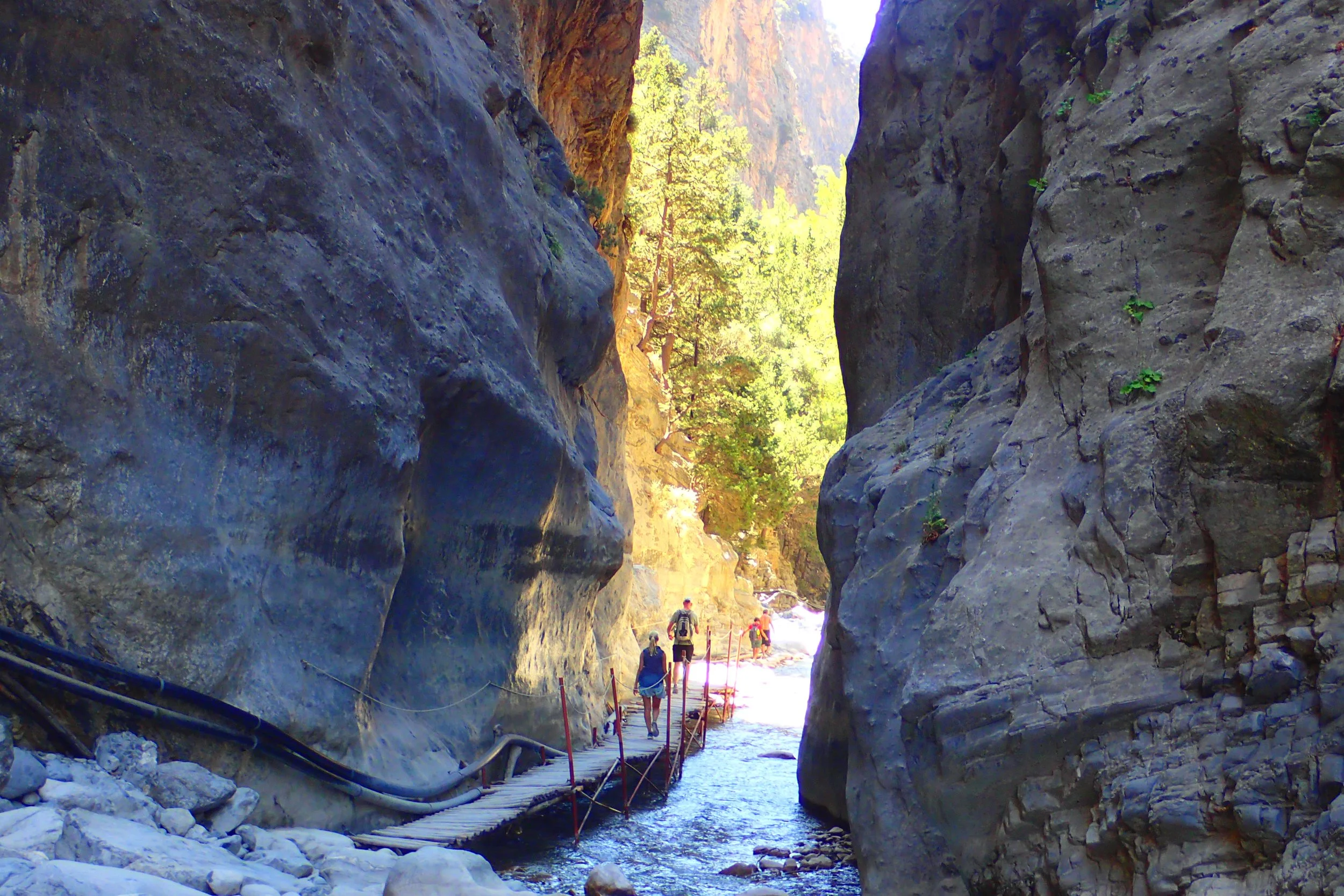
I knew Crete had hiking. But I didn’t know Crete had a hiking experience that would make it to my top 5 list!
Samariá boasts a difficult, steep, downhill hike that levels off through an absolutely stunning gorge. The views of Crete’s White Mountains on the bus ride there and the hike down only add to the overall experience. The scenery is unique and varied throughout Samariá. As a national park, there are amenities and clean water the whole way that make it as comfortable and safe as possible, too.
I had very few expectations about this hike except that I was afraid it would be too much of a touristy experience for me. Having to take a bus tour there did not sit with my independent, adventurous style. But I listened to other hikers advice and did it a different way from my usual standard—and it paid off! This hike was perfection from start to finish!

What could possibly make a beach a unique and interesting experience? At a typical beach, you’ve got sand, you’ve got ocean, you’ve maybe got some decent beach amenities like lounge chairs and food options.
But Preveli Beach is not your typical beach.
Preveli is special because a freshwater river dumps into the sea there. This river also flows its way through one of Crete’s largest, most beautiful palm forests! If that weren’t enough, Preveli Beach has crystal clear water with a perfect area for snorkeling.
All of this combined makes Preveli one of the most adventurous, diverse, and unique beach experiences I’ve had in a long time!

I absolutely love Greek food. For 6 years, I lived near Ditmars Boulevard and Steinway Street in Astoria, Queens, a major Greek neighborhood of New York City. In that neighborhood are many traditional Greek restaurants, serving up delicious fresh seafood and souvlaki. Outside of my graduate school in Manhattan, there was a Mediterranean-style food truck that I would often go to for my lunch break—tzatziki sauce, anyone?
I fell in love with this cuisine back then and now I was going to experience it while visiting the country where it came from. The food was absolutely a top reason why I chose Greece as my destination this past summer.
Crete has its own special Greek foods as well as the traditional style found all over the country. From homemade Mediterranean breakfast spreads to the dish of the day at local tavernas, Crete was an amazing food experience all around.

I try to dive at least once in every location I visit in the world. Crete gave me the opportunity to dive the Mediterranean Sea for the first time!
Crete is known for its various caves, both on land and under the surface. I decided to dive two of the less commonly visited caves while in Chania.
While another group of divers in the area messed up our experience of one cave, I really enjoyed diving Seal Cave which was the longest cave I’ve ever been in!

I found another one of my top favorite locations in the world while in Crete. Balos Beach is definitely up there in my top 5 somewhere. The reason is clear, as you’ve already caught the main photo on this post!
The dreamy views of the Balos lagoon and surrounding islands alone are amazing. Swimming in these magical waters was incredible. But what made this experience top notch was exploring the surrounding landscape.
From a private little snorkel spot to sea salt-infused rocky tidal pools, I really loved our full day spent at Balos Beach. We stayed until all the tourists cleared out to catch a totally natural sunset view which made this an especially unique experience.

Sometimes I randomly pick adventures to go on without doing much research in advance. This has it’s benefits and its drawbacks!
The first adventure Carolina and I went on outside of Chania was one of these unresearched occasions. I thought we would go on a short, meandering hike to a beautiful, ocean chasm for a nice swim on a hot day. In reality, it was a sun-soaked and complicated path down to unknowingly treacherous waters!
While this hike to Katholiko Bay had some difficult twists and dramatic turns, I still can’t wait to share all the beautiful scenery, the ancient ruins, the cool caves, and the turquoise waters we encountered. In the end, I highly recommend this hike but definitely pay attention to some of the lessons I learned!

Chania is a new favorite city of mine and its all because of its area called Old Town. I had the perfect Airbnb location in the center of the Jewish quarter of Old Town. This put me right in the middle of an incredible mix of historic architecture and modern tourism.
From the crumbling ruins to the colorful painted alleyways, I was utterly enchanted by Old Town. Walking the streets alone was a magical experience. Add in a charming, Greek local who I heard open up his restaurant each morning, an Egyptian lighthouse reflecting off the waters of a Venetian harbor, and some furry friends and you have a total package of an experience.
I have so much to share with you in this post. There’s so many photos that I hope capture at least a small percentage of the feeling of this place! Enjoy!
Hello everyone! I am writing to you very briefly from Greece. I have been here for about a week now and I cannot wait to share with you all of my adventures so far.
Although the COVID-19 pandemic is not over, and there is much unrest in Eastern Europe and the rest of the world, I felt it was important to take advantage of this small window in which things are relatively stable. At least, they are stable enough for me to feel I could manage within my personal comfort zone.
But what made me travel? Where am I? Who am I traveling with? And where I am going next?
Norway
I was in Norway for about 2 weeks but for 1 week of it I had COVID-19. So my travel experiences were a bit limited there. Nevertheless, I manage to see some incredible sights, hike what is now a top 5 hike experience for me, and explore the beautiful city of Oslo.
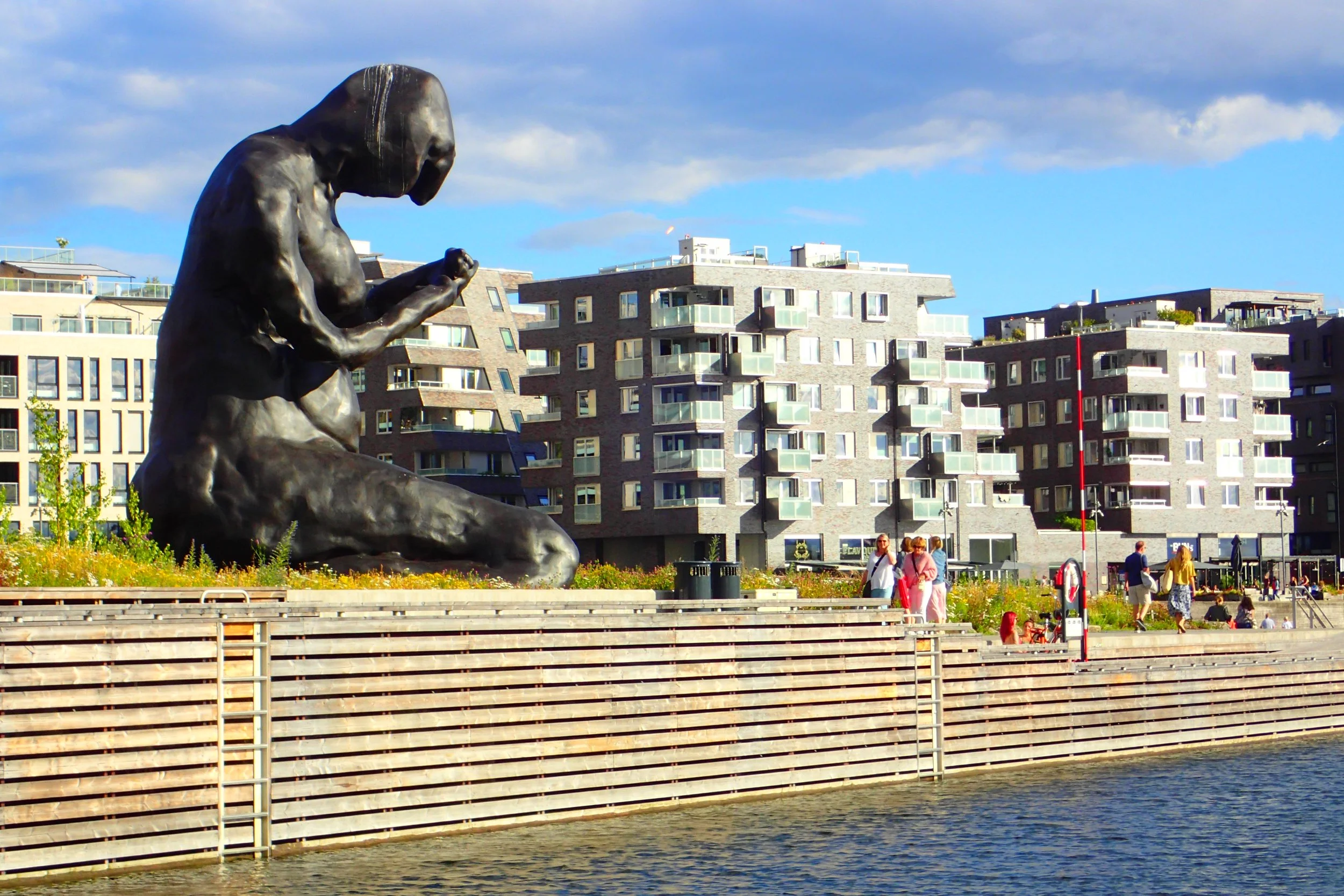
I only planned to be in Oslo, Norway for 2 nights. Then my COVID-19 test remained positive and 2-nights turned into 5!
I had to find things to do that were not only predominantly outdoors and socially distant but also low budget—just in case my travel insurance didn’t come through for me on this occasion (it did!).
Anyway, what I learned is that Oslo is a small, fairly quiet city and it has some really special features and experiences that make it stand out.
I had an awesome time exploring everything from its outdoor sculptures to parks and waterways. Check out this post for my list of low-budget highlights in the beautiful city of Oslo!

As one of Norway’s three most spectacular hikes, Trolltunga easily made it to my top 5 hikes of all time. The hike met my standards in terms of length, challenge, and interesting terrain.
The views, especially at the “Troll’s Tongue,” are what made this out and back hike move right onto my favorite hikes list.
The hike from the village of Skjeggedal requires some pre-booking and planning especially depending on the time of year and extent of the challenge that you want. That way, if you happen to go, you can choose the best way for you to enjoy this hike’s spectacular Norwegian landscapes.
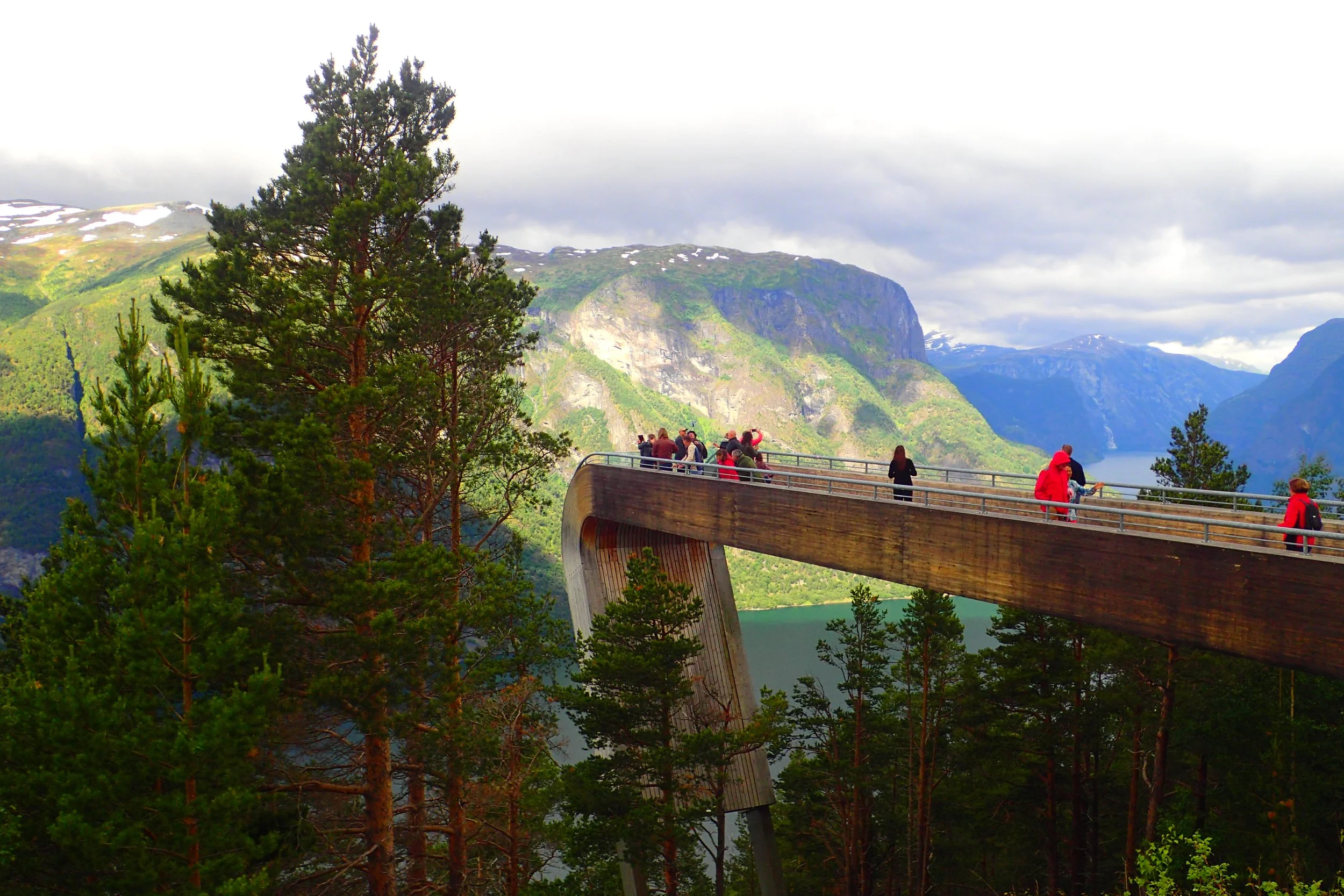
We began our road trip into Norway after picking up Carolina's coughing, sniffling child in Stockholm (lol). We were on our way but stopped for a night at a friend's place in Kopparburg, Sweden and at a park before crossing the border north of Oslo.
In this post, I cover the major highlights we saw as we made our way from the Oslo area out to the Bergen area and back over 7 days.
From roadside views with multiple waterfalls to the longest tunnel in the world, Norway is a great country to take a road trip.

I was embarking on the second half of my trip to Europe in July 2022 knowing full well I had a lot less control over what was about to happen.
For one, I would be traveling with Carolina in her part of the world so I let her do most of the planning. We were going to be using her car and using her high quality camping gear for the majority of the trip. Plus, we were going to be traveling with her child.
All of these factors had benefits to me as a solo traveler because it’s always less expensive and fun when you can share the costs of things with locals. What I didn’t anticipate was us all getting sick with COVID-19, diminishing the fun and causing the costs to skyrocket quickly!
In the end, insurance saved me and I got a huge reimbursement bringing my expenses to just under $1500. Not bad for one of the more expensive places in Europe to travel!
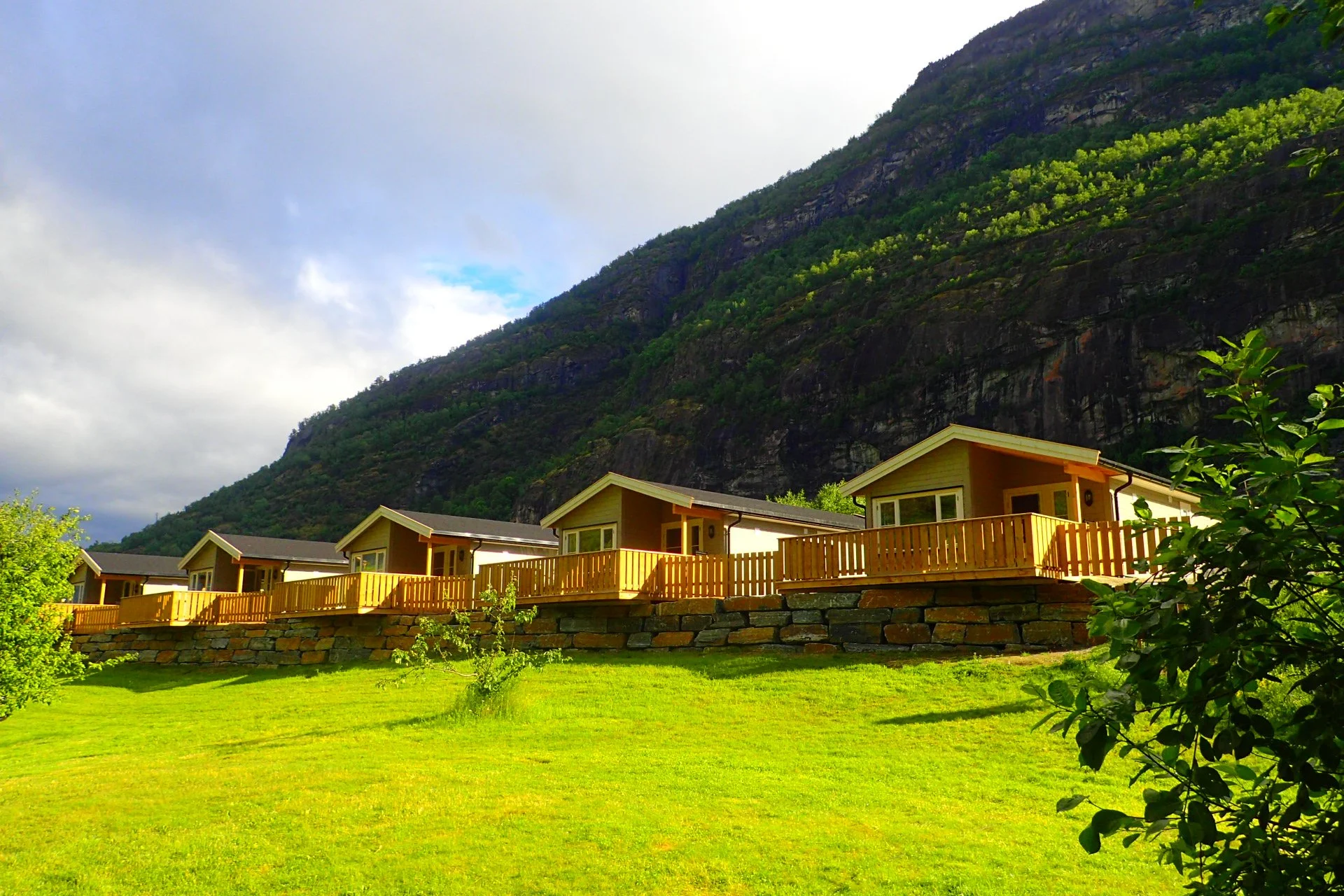
It’s the big reveal post! If you didn’t guess it last time, now you know that I flew to Sweden from Greece. Carolina and I planned a road trip from the Stockholm airport into Norway. Our main destination was actually Norway, but we also passed through parts of Sweden to get there.
Carolina’s daughter is on this trip with us. She is adorable and it’s fun to have some kid energy. I’ve never traveled with a child before! I am excited to write about what that has been like. I am sure my readers who travel with children will be especially interested, particularly because we are camping and hiking, too.
This post is just a quick little update and to share a few initial photos. Get a sneak peek at what’s to come.
Sweden
I spent just one day and one night in Stockholm before beginning a road trip to Norway. My time there was spent exploring the sights of the city, including a sunken Viking ship and a sculpted vulva?! I hope to make it back to Sweden one day for exploration outside of Stockholm!

Carolina and I had time to kill in Stockholm for a day as we waited for her daughter to arrive from Italy. After recovering from our red eye flight from Greece with a car garage nap, we wandered the streets and did a little self-guided landmark and art museum sight-seeing.
We were on our own and pretty aimless until we met up with an old friend of mine. Giles took us around to a few of the more interesting spots including a sunken warship museum with a funny backstory.
This top 10 must-see’s include some typical stops but also some unexpected ones, like where to find Stockholm’s legendary stone face crying over—you’d never guess it—a sculpted vulva! Keep reading to find out more about our 24 hours in Stockholm!
Switzerland
I got to experience the wonderful train system of Switzerland by traveling through from Germany to France.
I stopped in Interlaken to explore the Swiss Alps thoroughly and also to fulfill a major bucket list item—Hang-gliding!
There is so much to see and do, mostly for free or low cost, in any big European city. London is no different.
I spent about 4 weekends exploring London during my visit to England in 2012. On those visits, I wandered the streets of London and found incredible history, architecture, art, shopping, food, parks, and more.
I share in this post all of the highlights from my mostly self-guided experience around London.